23 May 2026
Wheels of Change: The Evolution of Bicycle Design and Its Effect on Tour de France Victory Margins
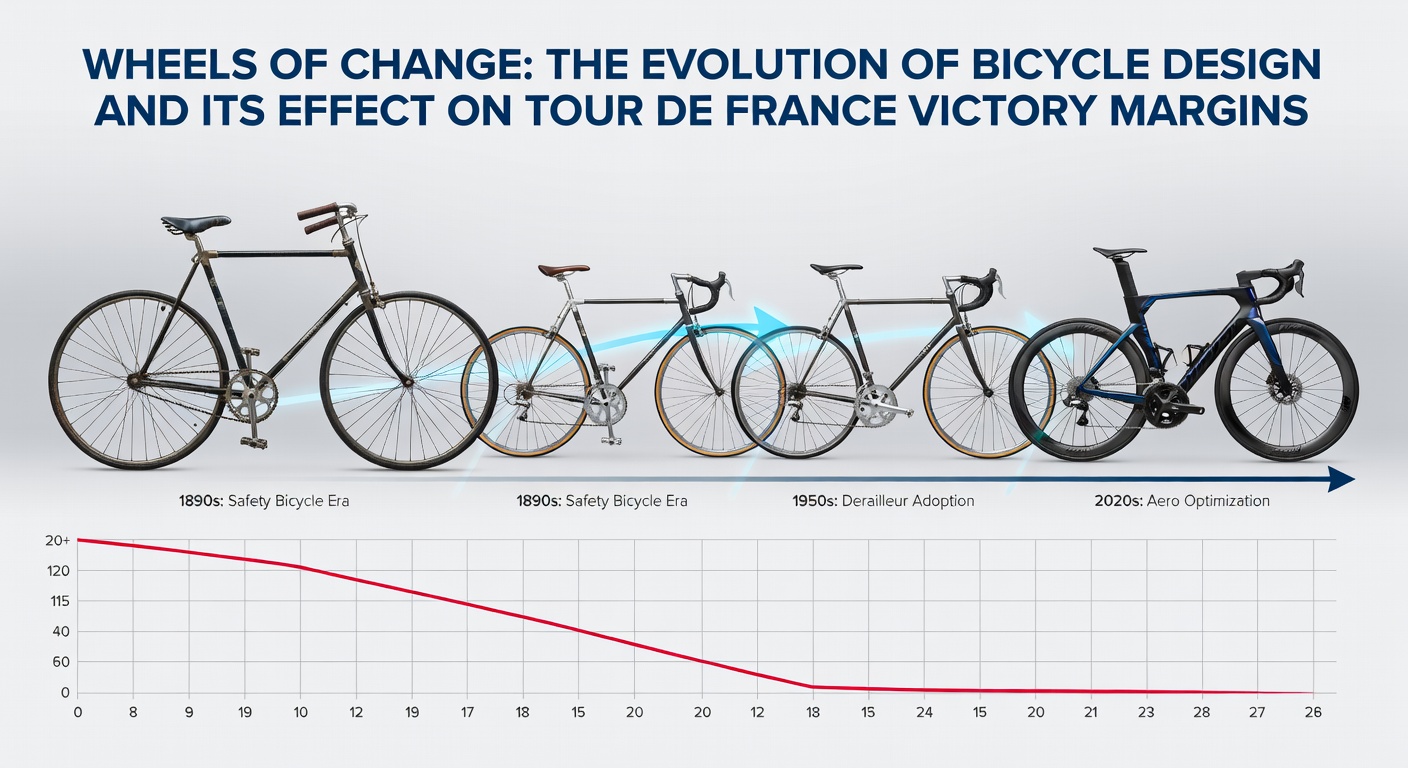
Early bicycle designs in the late 19th and early 20th centuries featured heavy steel frames along with wooden wheels and basic drivetrains that limited speed and endurance during multi-stage races like the Tour de France which began in 1903, and data from race archives shows that victory margins often stretched into hours because equipment constraints forced riders to conserve energy over rough roads and long distances while mechanical failures frequently decided outcomes rather than pure athletic differences.
Initial Innovations and Their Influence on Race Dynamics
By the 1920s and 1930s manufacturers introduced lighter steel tubing along with improved gear systems yet frames still weighed over 15 kilograms in many cases according to records from the Union Cycliste Internationale and these incremental changes allowed slightly faster average speeds but overall margins between top finishers remained large since aerodynamic drag and rider fatigue continued to play dominant roles in how competitors managed daily stages across varied terrain.
Post-War Developments Shift the Competitive Landscape
After World War II aluminum frames entered the scene and reduced overall bike weight by several kilograms while derailleurs became more reliable and studies of Tour de France results from the 1950s onward indicate that these modifications contributed to narrower time gaps in general classifications as riders could maintain higher cadences and recover better between stages though weather and road conditions still created substantial variability in final standings.
Aerodynamics and Material Science Transform Performance Metrics
During the 1980s and 1990s carbon fiber composites replaced aluminum in many professional models and frame geometries incorporated aerodynamic tubing along with clipless pedals and integrated handlebars that cut wind resistance by measurable percentages and figures from race timing data reveal corresponding reductions in average stage times which in turn compressed victory margins among elite contenders who benefited from consistent power transfer and reduced energy expenditure over the three-week event.
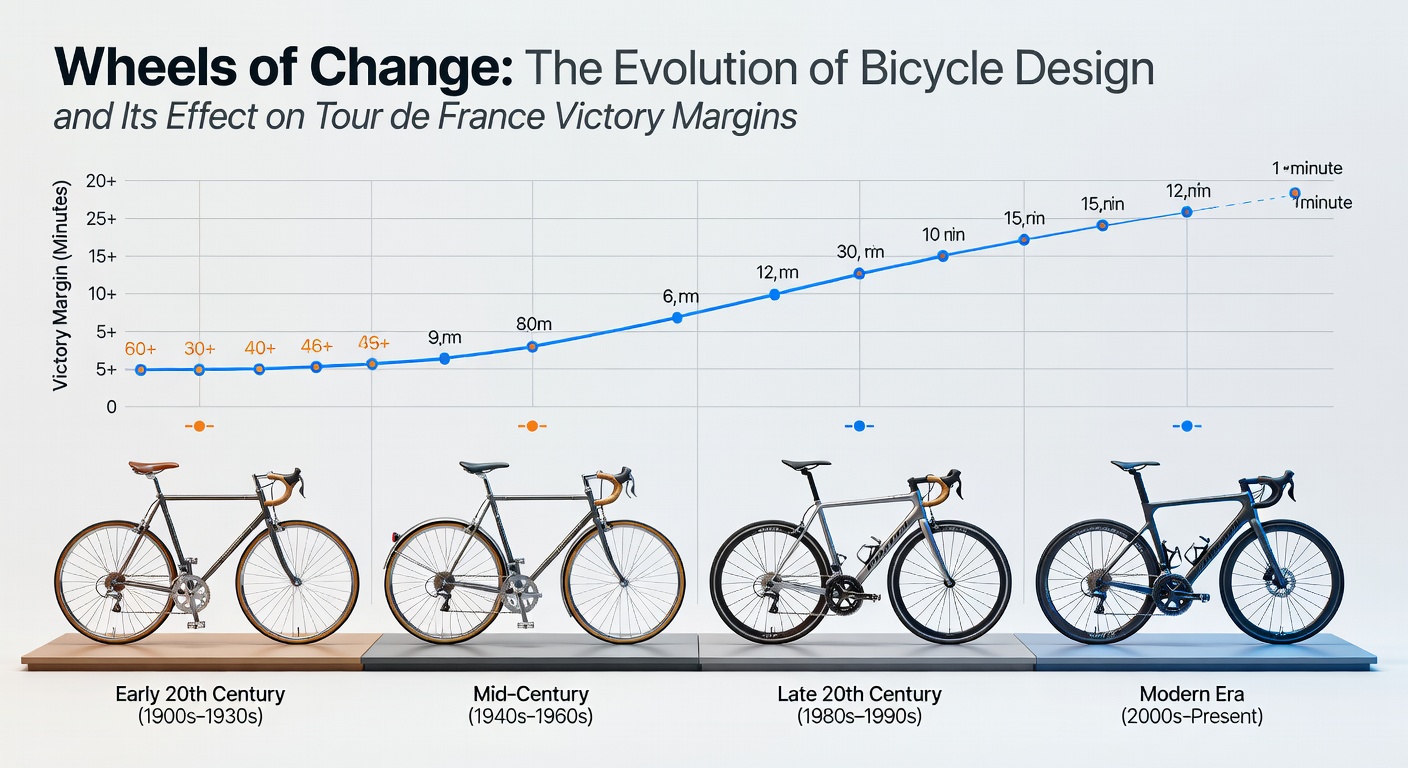
Electronic shifting systems arrived in the early 2000s and offered precise gear changes under load while disc brakes improved stopping power and modulation on descents and observers tracking performance metrics note that these technologies coincided with some of the tightest general classification battles in recent decades because teams could optimize equipment setups for specific stage profiles and minimize time losses that previously accumulated through mechanical inefficiencies.
Contemporary Designs and Narrowed Victory Margins
Current regulations from governing bodies limit certain advancements such as minimum frame weights and banned aerodynamic aids yet ongoing refinements in wheel rim depths tire compounds and integrated cockpits continue to influence outcomes and data compiled across multiple Tours shows that margins between first and second place have frequently fallen below one minute in the past decade when compared with earlier eras where gaps exceeded 10 minutes on average in many cases.
Researchers at institutions including those affiliated with European sports science programs have examined how these cumulative design evolutions interact with rider physiology and training methods and their analyses indicate direct correlations between lighter stiffer frames and the ability of teams to control race pace which often determines whether challengers can gain or lose seconds that ultimately decide the overall winner.
Case Examples of Equipment Impact Across Eras
One notable instance occurred during the 1990s when certain squads adopted early carbon prototypes and recorded improved climbing times on key mountain stages while similar patterns emerged in later years with the introduction of deeper-section wheels that enhanced stability at high speeds and allowed riders to preserve energy for decisive breakaways or time trials.
Those who have reviewed historical timing sheets point out that such equipment edges sometimes translated into overall advantages measured in fractions of a minute per stage which accumulated into decisive margins by the final podium presentation in Paris.
Regulatory Responses and Future Trajectories
Governing organizations have periodically updated equipment standards to maintain competitive balance and prevent technology from overshadowing athletic merit and as preparations for upcoming seasons unfold in May 2026 teams continue testing prototypes within those boundaries while monitoring how small design tweaks might affect stage-by-stage efficiency.
Conclusion
The progression from basic steel constructions to sophisticated carbon fiber platforms has demonstrably influenced Tour de France outcomes through measurable effects on speed endurance and reliability and comprehensive review of race data alongside material advancements underscores how these elements have collectively shaped victory margins across more than a century of competition.