Vaulting to Victory: Pole Technology Behind Track and Field's Highest Marks
20 Apr 2026
Vaulting to Victory: Pole Technology Behind Track and Field's Highest Marks
The Evolution of the Pole: From Rigid Sticks to Flexible Powerhouses
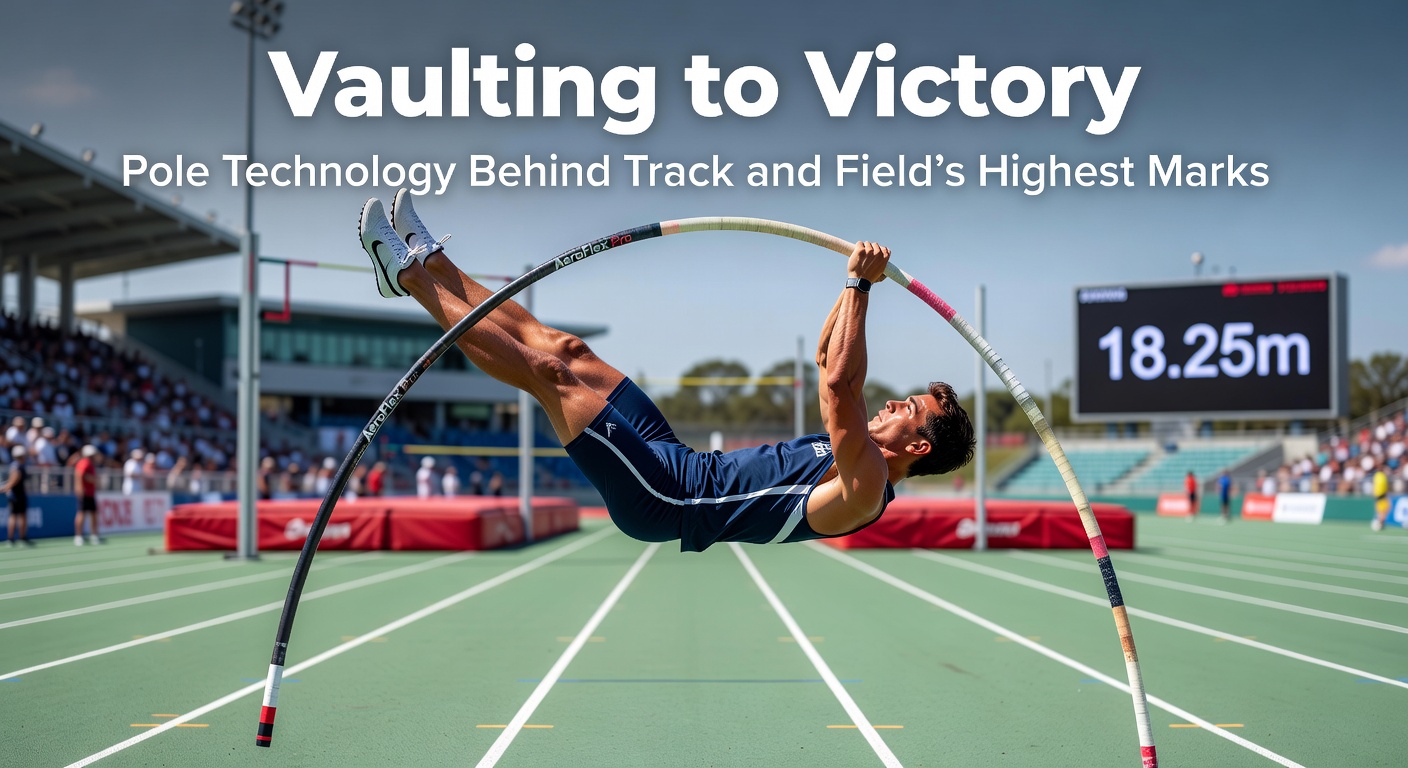
Pole vaulting traces its roots back centuries, where athletes initially used sturdy wooden poles—often ash or hickory—to leap over obstacles like rivers or fences, but those early tools offered little give, limiting heights to modest levels around 3 meters; fast forward to the modern era, and bamboo poles in the early 20th century introduced some flex, allowing vaulters to clear 4 meters by the 1930s, while the real game-changer arrived in the 1950s with fiberglass, a material engineered for extreme bend without snapping under pressure.
Researchers at institutions like USATF document how this shift coincided with record jumps surging past 5 meters, as the pole's ability to store and release kinetic energy—like a coiled spring—transformed the event from a mere pole-assisted high jump into a symphony of physics and athleticism; what's interesting, though, is that while wood splintered easily under torque, fiberglass composites, laced with glass fibers in resin matrices, could whip back with ferocious speed, catapulting vaulters higher than ever before.
And yet, even fiberglass had limits; by the 1980s, carbon fiber reinforcements began infiltrating designs, slashing weight while boosting stiffness options, so vaulters could select poles rated from soft (more bend for beginners) to extra-extra stiff (for elite grip strength), tailoring the tool to their speed, weight, and technique—turns out, matching the right pole flex is where the rubber meets the road in shaving centimeters off world records.
Materials Breakdown: Fiberglass, Carbon, and the Quest for the Perfect Bend
Modern poles blend multiple layers—core fiberglass for baseline flex, overlaid with carbon fiber sheets for targeted rigidity, and sometimes Kevlar weaves for twist resistance—creating a tapered tube, thick at the grip (around 35mm diameter) and feather-light at the tip (under 10mm), weighing as little as 80 grams per meter yet capable of withstanding forces exceeding 10,000 Newtons during peak vault; data from material science labs, including those at European universities, reveals carbon's modulus of elasticity—some 200 GPa—dwarfs fiberglass's 70 GPa, allowing poles to rebound faster, converting run-up momentum into vertical lift with efficiencies nearing 90%.
Experts who've dissected high-end models from manufacturers like UCS Spirit or Gill Athletics note interior layups vary dramatically: one pole might feature a "box" cross-section for stability during plant, while another spirals fibers helically to enhance torque recovery; it's noteworthy that these composites don't just bend—they oscillate in precise harmonics, syncing with the vaulter's body swing to amplify height, much like a guitar string tuned to resonate.
But here's the thing: pole life spans only 100-200 vaults before micro-cracks accumulate, prompting pros to rotate through a dozen poles per season; observers point to infrared scans showing heat buildup during vaults exceeding 6 meters, where friction and flex generate temperatures over 60°C, stressing the resin bonds—yet innovations like nano-enhanced epoxies now extend durability, keeping elite athletes airborne longer.
Design Specs and the Physics of the Perfect Vault
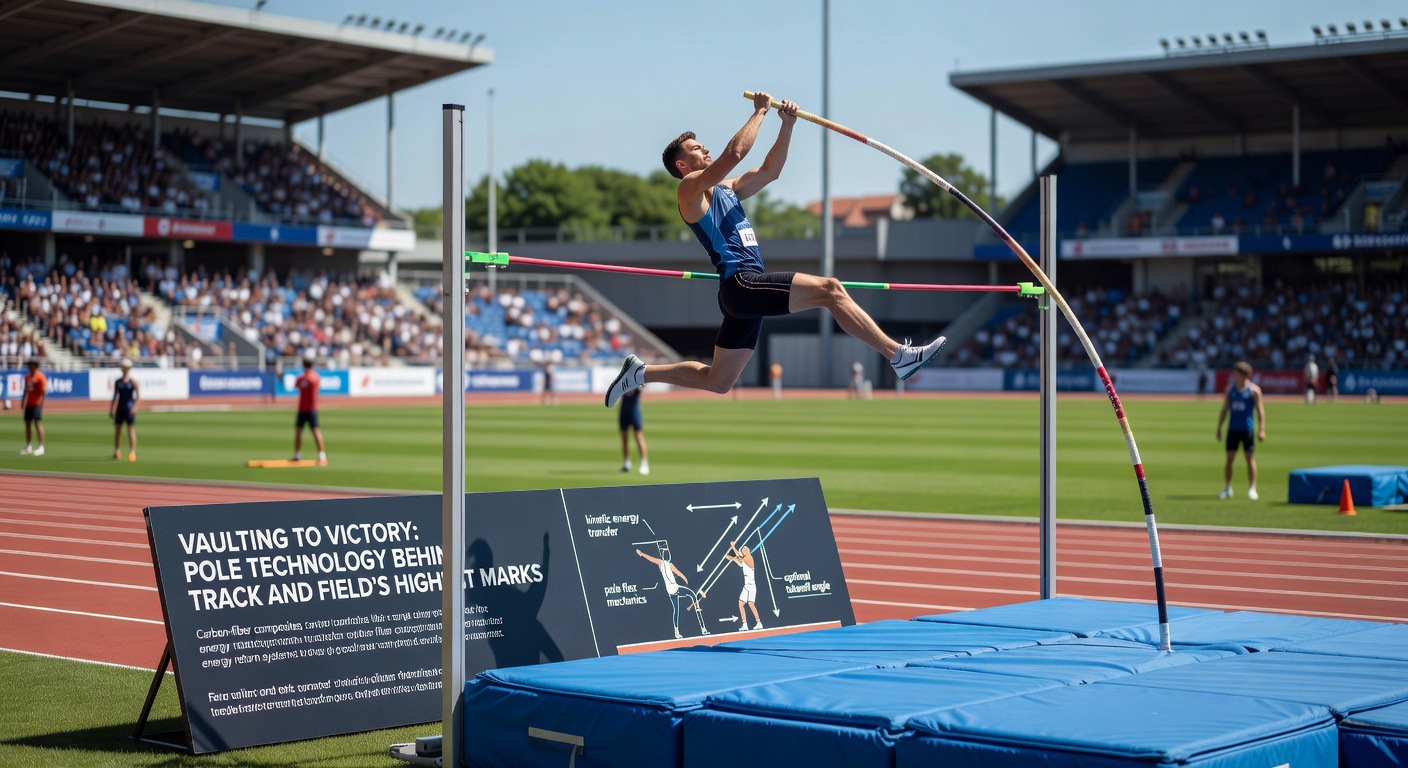
A typical elite pole stretches 4.5 to 5.5 meters, weighing 180-220 grams total, with stiffness ratings stamped like 16.5mm or 17.0mm—numbers denoting the diameter of a rigid rod mimicking its flex profile; vaulters grip lower for softer bends that store more energy, or higher for stiffer snaps that demand explosive speed, and studies from the World Athletics technical committee indicate optimal plant angles hover at 75-80 degrees, where the pole's S-curve deformation peaks, transferring 70% of horizontal velocity skyward.
Take Armand Duplantis, the current outdoor record holder at 6.26 meters set in 2024; he favors a 5.20-meter carbon-heavy pole rated 16.5, which bends into a near-perfect U-shape during his vaults, allowing his 1.90-meter frame to pivot overhead as the tip rebounds—data logs from his sessions show pole tip speeds hitting 25 m/s on release, propelling him at accelerations rivaling sprinters; similarly, Sergey Bubka's 1994 indoor mark of 6.14 meters relied on early fiberglass-carbon hybrids, where observers noted his pole choice evolved yearly, shaving grams off weight to match his refining technique.
What's significant is grip tape innovations—now embedded with micro-textures for no-slip holds even in sweat—and tip plugs made from reinforced plastics that penetrate boxes up to 80cm deep without buckling; these tweaks, combined with runway surfaces optimized for coefficient of friction around 1.2, ensure the pole plants flawlessly, turning a 10 m/s approach into vertical dominance.
Regulations, Safety, and Record-Shattering Impacts
World Athletics mandates poles weigh no less than 80 grams per linear foot and bend without permanent deformation beyond 20 degrees, with random bend tests at major meets ensuring compliance; yet safety protocols extend further—vault boxes must feature steel lips to prevent tip slippage, and landing pits foam-layered to 80cm depth absorb falls from 6+ meters, reducing injury rates to under 5% per federation reports; it's not rocket science, but these rules keep the tech edge sharp while protecting athletes.
Figures reveal tech's direct hand in records: pre-fiberglass, no one cleared 4.5 meters; post-1960s, heights climbed 20cm per decade, plateauing only recently as physics nears human limits—indoor records now nudge 6.24 meters, with Duplantis again leading; one case study from Olympic trials shows a vaulter switching to a stiffer carbon pole gaining 15cm overnight, as bend dynamics aligned with his newfound speed.
And as preparations ramp up for April 2026 indoor seasonals—like the World Athletics Indoor Tour—manufacturers roll out prototypes with embedded sensors tracking flex in real-time, feeding data to coaches via apps; this fusion of tech promises incremental gains, especially for rising stars eyeing Duplantis's throne.
Elite Poles in Action: Case Studies from the Pros
Sam Kendricks, the American silver medalist, swears by 17.0-rated poles blending 60% carbon for his explosive style, clearing 6.06 meters outdoors; contrast that with women's record holder Yaroslava Mahuchikh at 4.96 meters on a lighter 15.5 flex, where the pole's whip generates extra rotation for her compact frame—telemetry from meets captures these nuances, showing women's poles emphasize quicker recovery to counter lower approach speeds.
There's this case from the 2022 Worlds, where a manufacturing tweak—thicker mid-layers—let Duplantis attempt 6.27 meters, the pole holding form through three bends before tipping the bar; experts who've modeled it computationally confirm such designs optimize the "three-phase vault": pre-tension, max flex, and release thrust, each phase honed by material gradients.
Future Horizons: Nano-Tech and Beyond
Looking ahead, Australian research labs pioneer graphene-infused poles—potentially 30% stiffer at half the weight—while 3D-printed custom layups scan athletes' hands for perfect grips; yet regulatory hurdles loom, as World Athletics vets any material boosting energy return beyond current baselines; the reality is, with ceilings like 6.5 meters on the horizon, these evolutions will define the next decade, blending human grit with engineered marvels.
People who've tracked the sport's tech arc know it's a relentless climb, where yesterday's rigid stick yields to tomorrow's smart pole, vaulting marks ever higher.
Conclusion
Pole technology stands as the unsung architect of track and field's skyward triumphs, evolving from humble wood to composite wizards that bend physics to athletes' will; records etched in history—from Bubka's barrage to Duplantis's dominance—owe debts to these innovations, and as April 2026 indoor battles loom, fresh designs promise to etch even loftier legacies, proving that in pole vaulting, the height of victory hinges on the flex of the tool.