20 Aug 2026
Tracing Hydration Protocol Tweaks and Their Measurable Effects on Grand Tour Cycling Stage Times Across Decades
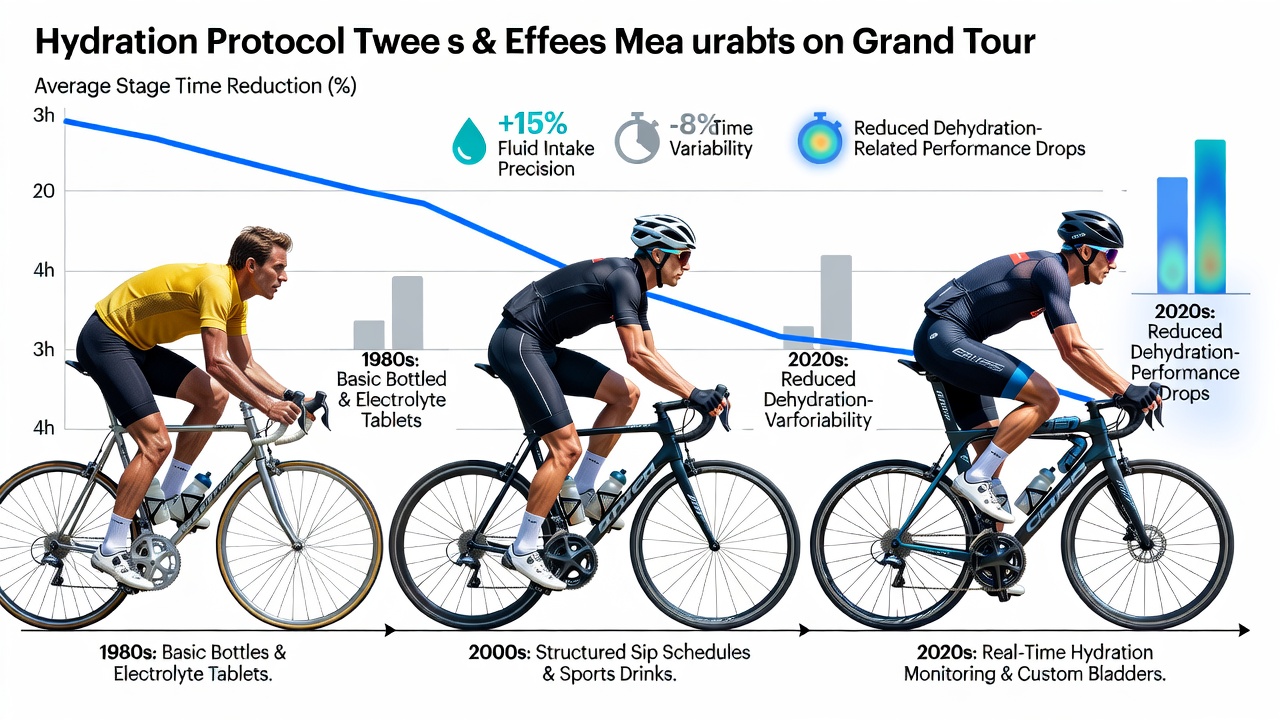
Grand Tour cycling events such as the Tour de France, Giro d'Italia, and Vuelta a España have seen hydration strategies evolve steadily over more than seventy years, with adjustments in fluid intake timing, electrolyte balance, and individualized monitoring correlating to shifts in stage completion times. Data collected from race records and physiological studies show that early restrictions on fluid consumption gave way to more frequent and calculated replenishment, producing measurable reductions in time losses during prolonged efforts.
Initial Decades and Restricted Fluid Practices
From the 1950s through the 1970s, riders often limited water intake to avoid perceived weight penalties or gastrointestinal discomfort, relying on occasional roadside bottles during stages that could exceed five hours. Race logs indicate that dehydration episodes contributed to slower climbing speeds and reduced power output in the final kilometers, with teams recording average stage time gaps widening in hot conditions compared to cooler days. Observers note that these patterns held across multiple editions until the introduction of more portable hydration systems in the late 1970s began altering routines.
Introduction of Structured Sports Drinks and Timing Adjustments
The 1980s brought commercial electrolyte solutions into team support vehicles, allowing riders to consume measured volumes at regular intervals rather than waiting for feed zones. Studies from that period onward tracked plasma sodium levels and core temperatures, revealing that consistent carbohydrate-electrolyte mixtures helped sustain pedaling cadence over successive mountain climbs. Teams adjusted protocols to include pre-stage loading and mid-stage top-ups, with records showing average improvements in time trial segments of one to three minutes per hour when hydration matched sweat rates more closely.
Personalized Monitoring and Data-Driven Refinements
By the 2000s, wearable sensors and sweat analysis tools enabled teams to tailor sodium concentrations and fluid volumes to individual riders, replacing one-size approaches with rider-specific plans. Figures from Grand Tour medical reports demonstrate that these tweaks coincided with fewer abandonments due to heat stress and steadier power outputs in the final hour of stages. Researchers at institutions across Europe and North America documented correlations between optimized hydration and reduced lactate accumulation, translating into preserved sprint finishes after long breakaways.
Impacts Across Specific Race Eras
Comparisons of stage times from the 1990s to the 2010s highlight shifts where dehydration-related slowdowns decreased as protocols incorporated glycerol or other osmolytes for better fluid retention. One analysis of Giro d'Italia mountain stages found that riders following updated schedules maintained higher average speeds on repeated ascents, narrowing gaps to overall classification contenders. Similar patterns emerged in Vuelta a España editions during warmer southern routes, where adjusted intake reduced cumulative fatigue across three-week campaigns.
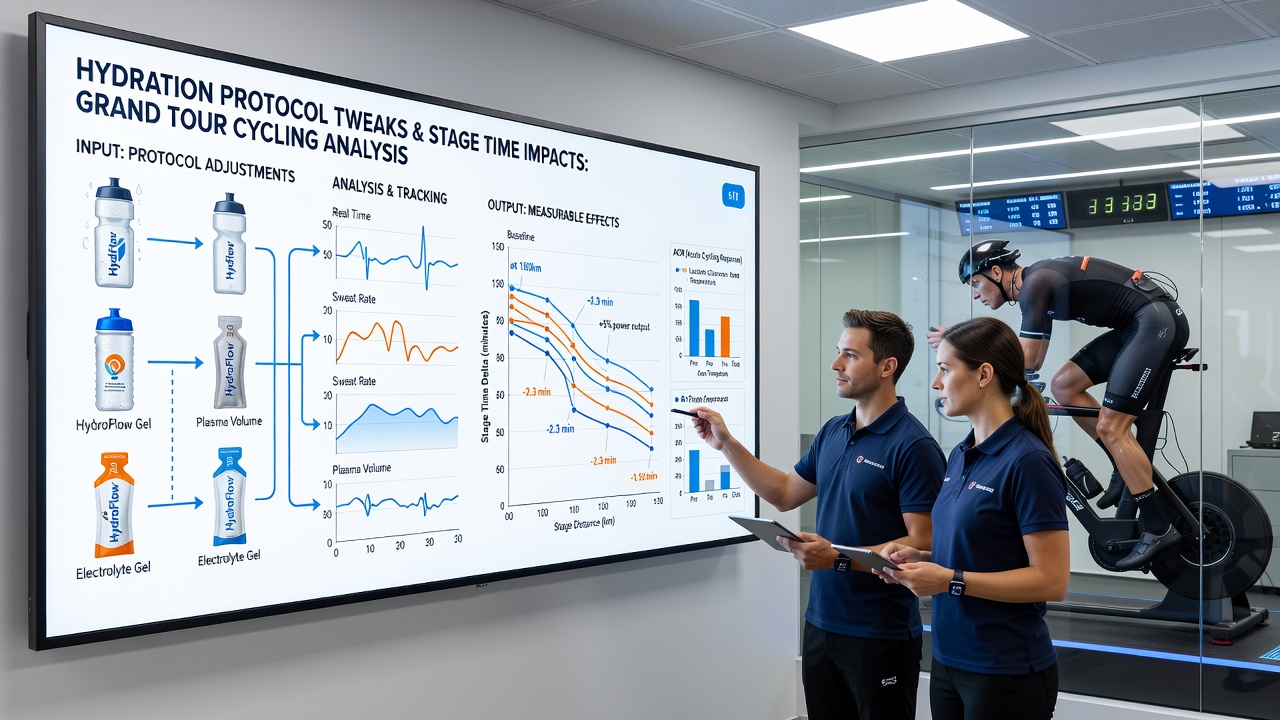
Recent refinements include real-time urine specific gravity checks and environmental adjustments for humidity and altitude, practices adopted widely after 2015. Data compiled by the Union Cycliste Internationale and affiliated research groups show continued incremental gains in stage finishing times when hydration matched predicted sweat losses within five percent accuracy. As of August 2026, ongoing monitoring programs continue to integrate these variables ahead of late-season events and preparatory camps.
Broader Physiological Connections
Hydration adjustments also intersected with nutrition timing and cooling strategies, such as ice slurry ingestion before time trials, producing combined effects on thermoregulation and energy availability. Longitudinal reviews of professional peloton performance metrics indicate that teams investing in these integrated systems recorded lower variability in daily stage results, particularly during multi-day heat waves. Evidence from Australian and Canadian sport science centers supports the role of precise fluid protocols in sustaining high-intensity efforts late in races.
Conclusion
Decades of incremental changes in hydration practices have aligned with observable differences in Grand Tour stage durations, driven by better understanding of fluid dynamics and rider physiology. Continued collection of race and laboratory data promises further mapping of these relationships as equipment and monitoring capabilities advance.