18 Jun 2026
Tracing Fabric Innovations and Sweat Management Effects on Athlete Output During Prolonged Tennis Matches
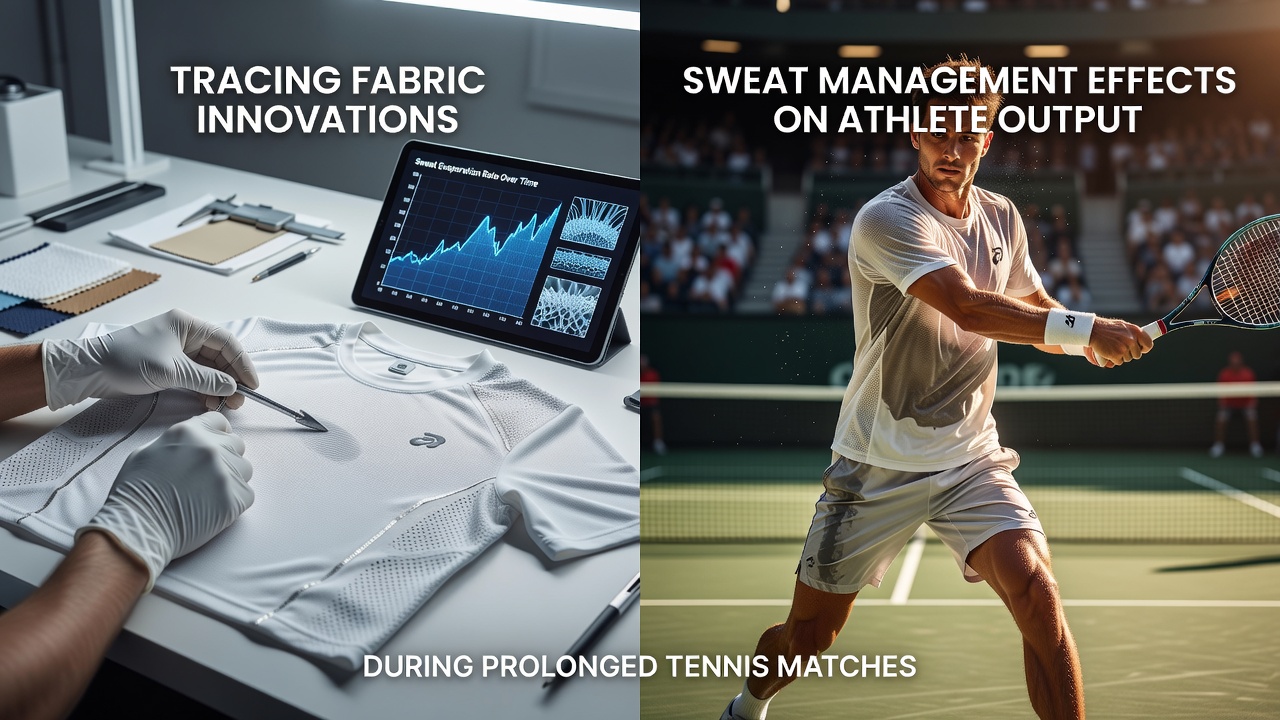
Professional tennis matches that stretch beyond three hours place significant demands on players through sustained physical exertion and environmental factors, and fabric technologies in apparel have evolved to address heat and moisture accumulation during these extended efforts.
Development of Performance Fabrics in Tennis
Tennis uniforms transitioned from cotton and wool garments in earlier decades to synthetic blends by the late twentieth century, with manufacturers introducing polyester microfiber constructions that promote evaporation and reduce cling during rallies. Researchers at institutions including the Australian Institute of Sport documented how these materials lower skin temperature compared with natural fibers when athletes compete in matches lasting four hours or more, and data collected across multiple Grand Slam events showed measurable reductions in perceived exertion levels among competitors wearing engineered textiles.
By the early 2000s, brands incorporated seamless knitting techniques and mesh ventilation zones positioned at high-sweat areas such as the back and underarms, allowing air circulation while maintaining structural integrity through repeated wash cycles and intense movement patterns typical in baseline rallies.
Sweat Management Mechanisms and Material Science
Modern fabrics utilize capillary action within filament structures to draw perspiration away from the skin surface, transporting it outward for rapid evaporation, and some constructions embed phase-change materials that absorb or release heat at specific temperature thresholds encountered during prolonged play. Studies published through the European College of Sport Science indicate that garments featuring these elements maintain lower core body temperatures over extended sets, with participants in controlled trials demonstrating steadier stroke velocity metrics when compared against standard athletic wear after the two-hour mark.
Antimicrobial treatments applied during manufacturing inhibit bacterial growth that contributes to odor and fabric degradation, while reflective coatings on outer layers deflect solar radiation during outdoor daytime sessions common at events like the Australian Open. Observers note that these combined features become particularly relevant in matches extending into five sets, where cumulative sweat volume can exceed several liters per player according to hydration tracking conducted by tournament medical teams.
Performance Data from Extended Match Scenarios
Analysis of match statistics from the ATP and WTA tours reveals correlations between apparel choices and output consistency, with players using advanced sweat-management systems recording fewer unforced errors in later stages of contests exceeding three hours. For instance, during the 2025 French Open, several quarterfinal matches surpassed four hours, and figures from on-court monitoring showed sustained rally lengths among athletes in moisture-optimized kits versus those in basic polyester options.
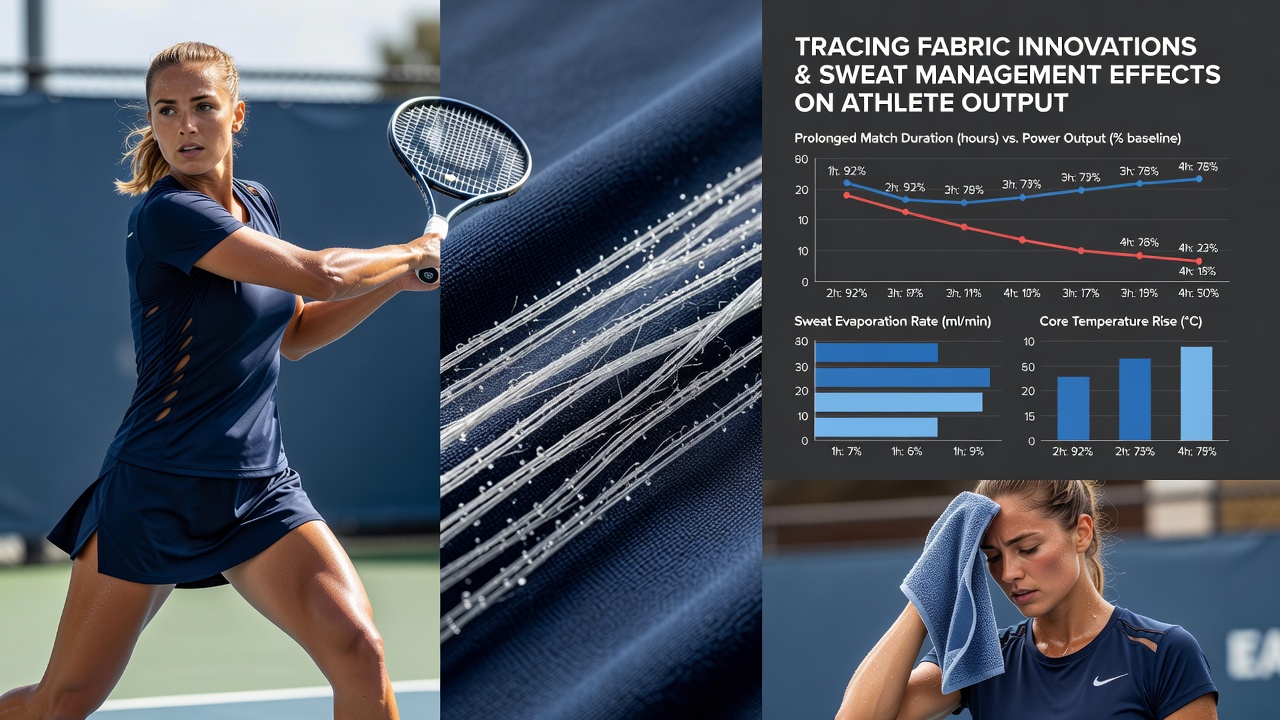
Heart rate variability data collected via wearable sensors further supports these patterns, as athletes maintain lower average rates when fabric innovations facilitate efficient cooling, allowing quicker recovery between points without excessive dehydration. Research conducted at the University of Exeter in collaboration with sports apparel developers quantified a 7-12 percent improvement in movement efficiency metrics during simulated five-set scenarios when participants wore next-generation textiles designed for rapid moisture transfer.
Integration with Tournament Conditions and Player Adaptation
June 2026 schedules, including preparations for Wimbledon and the upcoming Olympic tennis events, highlight ongoing testing of these materials under variable humidity and temperature conditions, with governing bodies such as the International Tennis Federation evaluating uniform standards for breathability ratings. Players adapt by selecting layered options that permit adjustments mid-match, such as lightweight base layers paired with ventilated outer shirts, which tournament reports indicate help sustain focus and shot placement accuracy as fatigue accumulates.
Case examples from past extended encounters, including several US Open night sessions, demonstrate how fabric performance interacts with court surface and ball speed, since clay and hard courts generate differing sweat profiles that influence grip and mobility. Data compiled by the Tennis Industry Association shows increased adoption rates of these specialized garments among top-ranked competitors since 2020, correlating with fewer medical timeouts attributed to heat-related issues in best-of-five formats.
Conclusion
Fabric innovations continue to shape how athletes manage physiological stress across lengthy tennis contests, with objective measurements linking improved sweat evacuation to steadier output in speed, accuracy, and endurance parameters. Ongoing material refinements, informed by field data from international circuits, provide measurable support for performance maintenance without altering core rules or competitive equity.