11 Jun 2026
Tracing Assist Networks That Powered Dynasty Runs in Professional Basketball Franchises
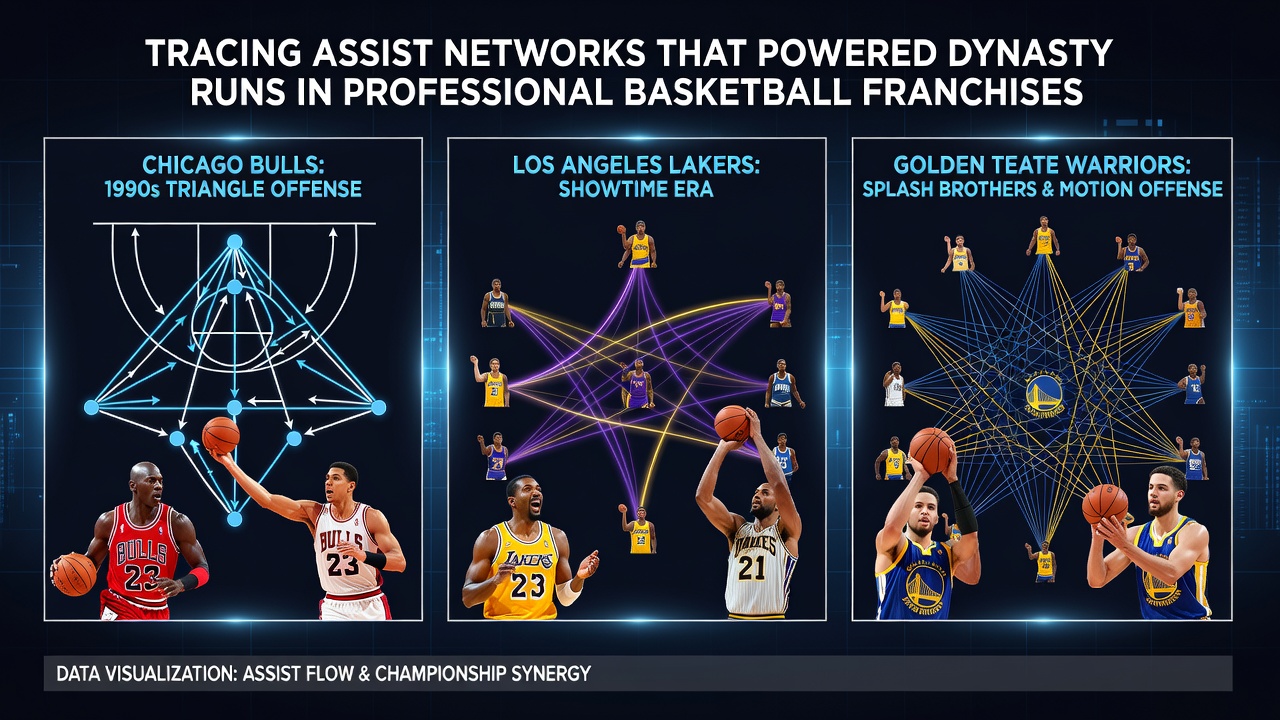
Assist networks in professional basketball represent the interconnected passing sequences that sustain offensive efficiency across multiple championship seasons, and analysts trace these patterns through detailed play-by-play data compiled by league statisticians since the 1970s. Teams that achieved dynasty status often relied on distributed ball movement rather than isolated scoring outbursts, with central facilitators directing traffic from the perimeter or high post positions.
Foundational Patterns in Early Professional Eras
The Los Angeles Lakers of the 1980s built their five-title run around Magic Johnson's orchestration of the fast-break system, where his assist totals exceeded 900 in multiple seasons according to official NBA records, and this distribution connected role players like Kurt Rambis and Michael Cooper into consistent scoring opportunities. Observers note that Johnson's court vision created layered passing lanes that adapted to defensive adjustments, allowing the franchise to maintain offensive ratings above league averages throughout their championship window. Similar structures appeared in the Boston Celtics teams that captured titles in 1981 and 1984, where point guard Nate Archibald and forward Larry Bird exchanged responsibilities in half-court sets that emphasized kick-out passes to open shooters.
These early networks depended on players who accumulated assists at rates that correlated with team success metrics tracked by basketball researchers at institutions such as the Australian Institute of Sport, which examined international league data for comparable patterns in player positioning and decision-making speed. Data from those studies indicated that squads maintaining assist-to-turnover ratios above 1.8-to-1 across playoff series advanced further in postseason brackets.
Peak Examples from the 1990s Chicago Bulls
The Chicago Bulls secured six championships between 1991 and 1998 through an assist framework anchored by Scottie Pippen's ability to initiate from multiple positions, and his yearly assist numbers ranged from 5.0 to 6.5 per game while guarding opposing stars on the defensive end. Michael Jordan received many of these passes in isolation scenarios, yet the network extended to Horace Grant and later Dennis Rodman through outlet passes that transitioned defense into offense within three seconds. League archives show the Bulls posted assist percentages above 65 percent during their title years, a figure that reflected shared ball-handling duties among at least four rotation players per game.
Analytics and Evolving Facilitation Roles
Modern tracking systems introduced after 2013 allowed researchers to map assist networks with greater precision, revealing how teams such as the Golden State Warriors sustained four titles from 2015 onward by cycling passes through Draymond Green at the top of the key. Green's hockey-assist totals, which measure secondary passes leading directly to scores, ranked among the highest recorded in that span, and this distribution involved Stephen Curry and Klay Thompson relocating off-ball to create spacing. Figures compiled by NBA statistical partners demonstrate that Warrior possessions ending in assists occurred on 62 percent of made field goals during their 2017 championship season.
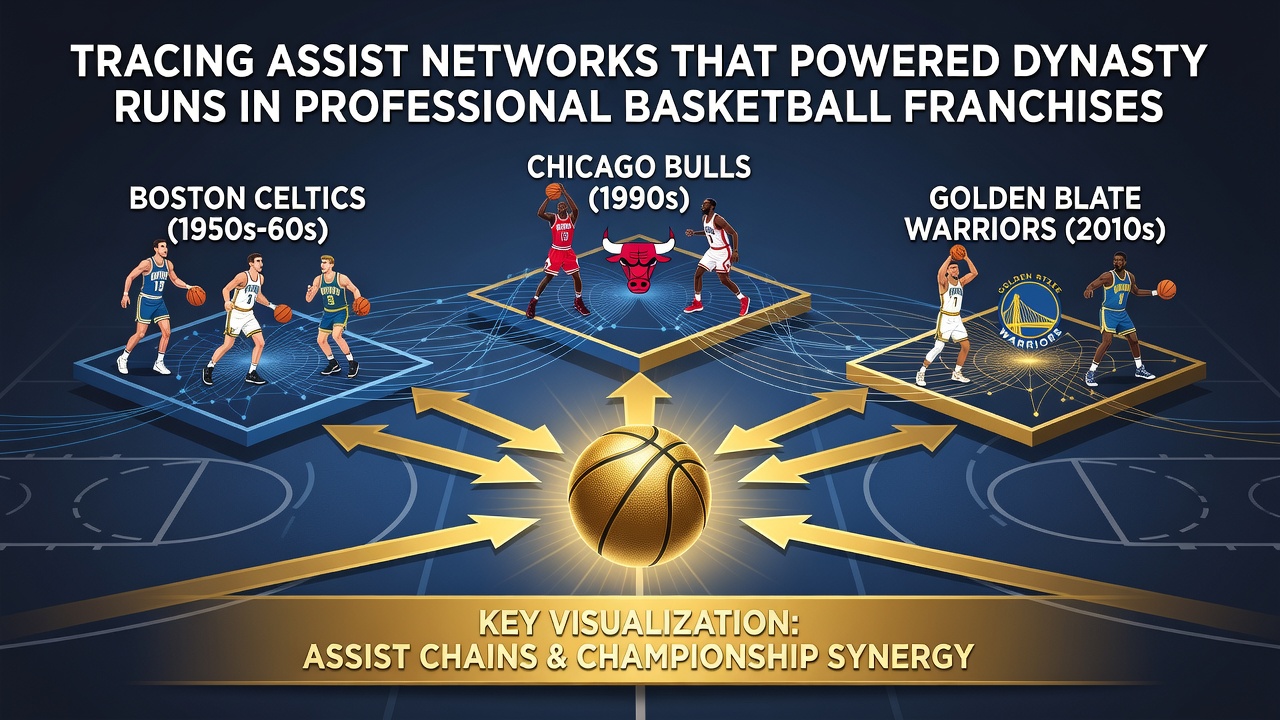
Those who've studied this data know that similar evolutions occurred in the San Antonio Spurs' 1999-2014 run, where Tim Duncan and Tony Parker alternated facilitation duties within a motion offense that generated open looks for perimeter shooters like Manu Ginobili. Research from European basketball analytics groups has linked these multi-year success periods to consistent development of secondary playmakers who absorbed defensive attention and redistributed the ball.
Case Studies Across Additional Franchises
The Detroit Pistons championship teams of 1989 and 1990 featured Isiah Thomas directing assists to Joe Dumars and Dennis Rodman in a half-court system that emphasized post entry passes followed by kick-outs, and this approach produced team assist rates that exceeded 70 percent in playoff games according to archived box scores. Later iterations in the Miami Heat's 2012-2013 title squads relied on LeBron James and Chris Bosh combining for high-volume assists while incorporating three-point specialists through corner rotations. Data indicates these networks adapted across regular-season and postseason contexts by increasing the frequency of skip passes when defenses loaded the strong side.
Observers note that current tracking in June 2026 continues to highlight how emerging franchises attempt to replicate these structures, with league-wide assist percentages rising steadily as teams invest in versatile forwards capable of initiating from the wing. Academic examinations of these trends, including work published through Canadian university sports science departments, emphasize the correlation between distributed assist leaders and reduced defensive load on primary scorers over extended playoff runs.
Conclusion
Tracing assist networks across professional basketball dynasties shows recurring themes of shared facilitation duties, adaptive passing lanes, and integration of defensive rebounding into transition opportunities. Historical records and contemporary tracking data together illustrate how these systems supported sustained title contention for franchises that prioritized ball movement alongside individual talent development.