8 Aug 2026
The Ripple Effects of Draft Position on Long-Term Team Success in North American Sports Leagues
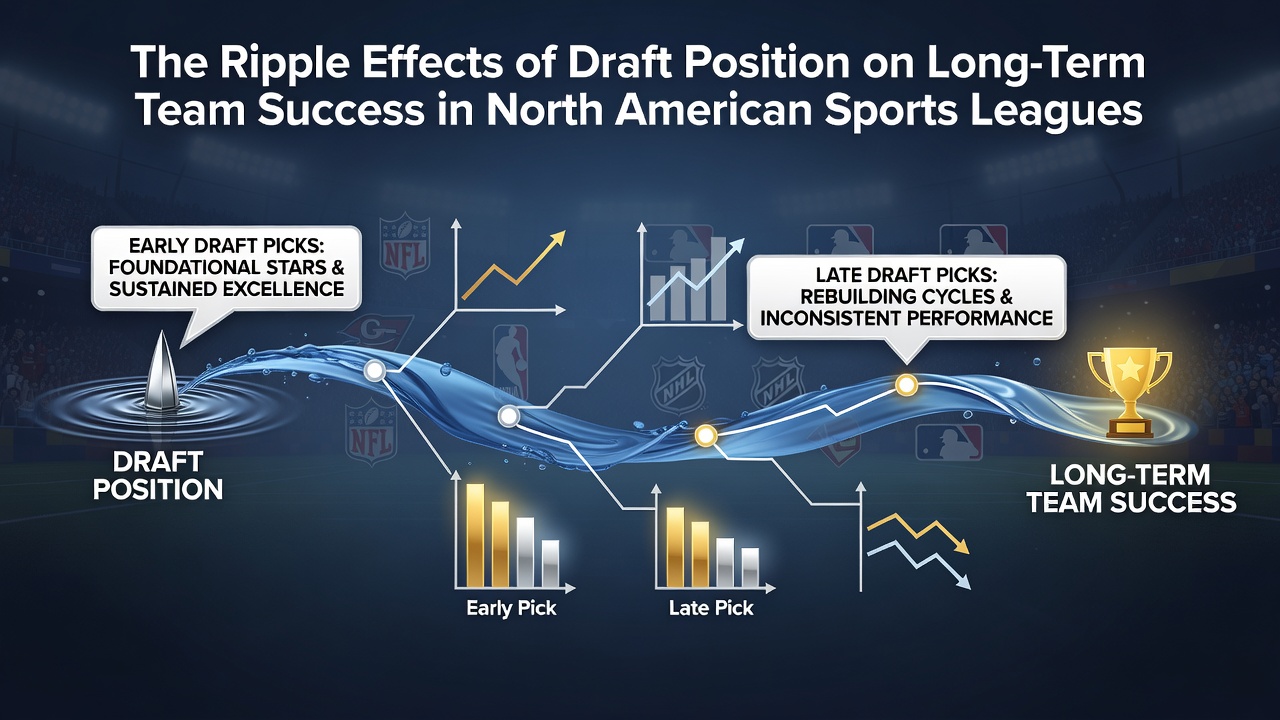
North American professional leagues including the NFL, NBA, NHL, and MLB rely on annual drafts to distribute incoming talent, and draft position shapes roster construction, salary structures, and competitive timelines for years afterward. Teams selecting early often secure foundational players who anchor franchises through multiple seasons, while later selections demand sharper scouting and development to close talent gaps. Data from league archives shows that franchises with consistent top-five picks build sustained contention windows more frequently than those relying on mid-round selections alone, although exceptions occur when organizations excel at player evaluation across the board.
Patterns Across the NFL and NBA
Quarterbacks taken in the first round of the NFL draft carry outsized weight because their performance dictates offensive schemes and cap allocations for a decade or more, and historical records indicate that teams landing elite signal callers early maintain higher win percentages over ten-year spans compared with those cycling through later-round options. Defensive players drafted high contribute to playoff appearances at measurable rates, yet the ripple extends to free-agency decisions since early picks reduce the need for expensive veteran acquisitions. In the NBA, top lottery selections frequently become All-Stars who elevate team efficiency ratings, and longitudinal studies of franchise records reveal that organizations securing multiple high picks within a five-year window reach conference finals more often than peers without such assets. Late first-round or second-round choices still produce rotation contributors, but the margin for error narrows because those players must outperform expectations to offset the absence of star-level production from the top of the draft.
Developments in the NHL and MLB
Hockey and baseball drafts operate under different constraints because prospects often require several seasons in junior leagues or minor-league systems before reaching the majors, which stretches the timeline between selection and on-ice or on-field impact. NHL teams that draft defensemen or goaltenders in the top ten slots gain cost-controlled assets who stabilize blue lines and crease situations for extended periods, and Canadian league statistics track how those early choices correlate with Stanley Cup Final appearances across multiple eras. MLB organizations face similar developmental lags, yet data compiled by baseball analytics groups shows that first-round pitchers and position players from the top fifteen selections account for a disproportionate share of WAR accumulation in championship seasons. Later picks succeed when scouting departments identify sleepers, but the variance remains higher because the probability of reaching major-league stardom declines steadily after the initial rounds.
Salary Caps, Trade Markets, and Organizational Culture
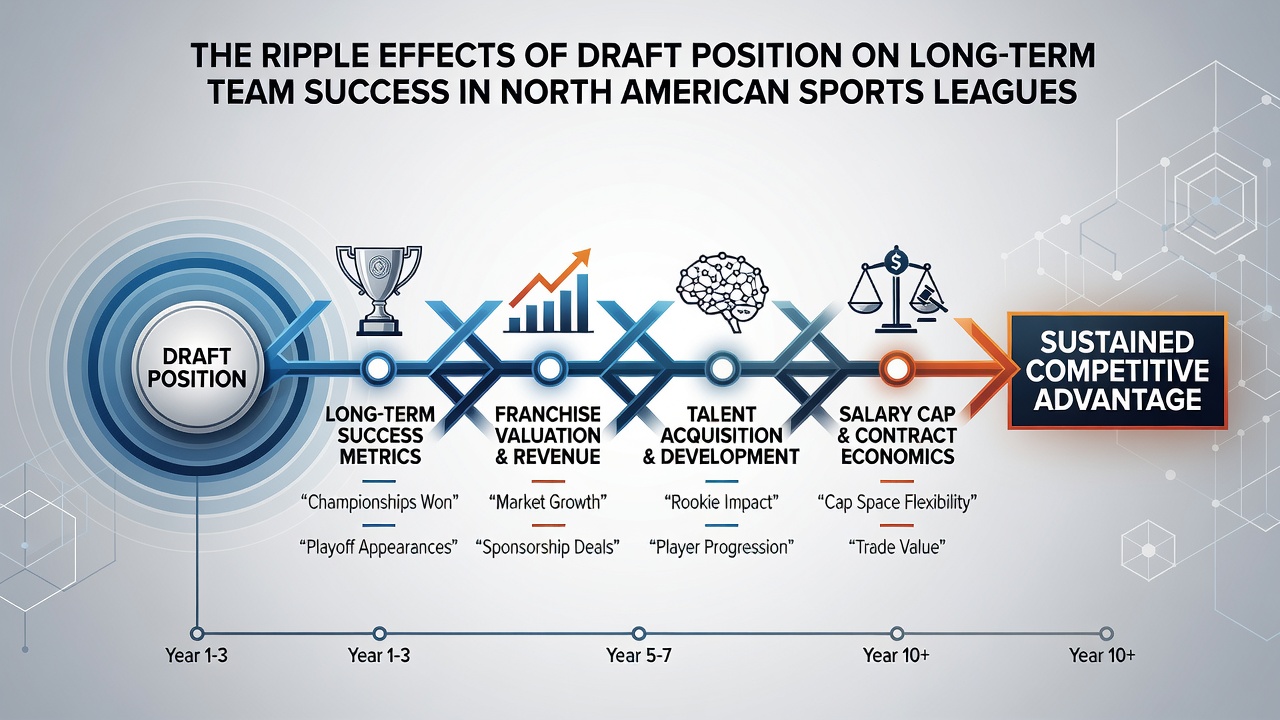
Early draft position influences not only talent acquisition but also financial flexibility under salary caps that govern three of the four major leagues, and teams retain cost-controlled years on high selections that free resources for complementary signings. This dynamic creates ripple effects in trade markets where contending clubs sometimes surrender future picks to accelerate timelines, while rebuilding sides stockpile assets that compound over successive drafts. Observers note that organizations with repeated high selections develop stronger internal pipelines for coaching and analytics staff because the volume of young talent demands coordinated development plans, whereas clubs drafting later must prioritize free agency and international scouting to remain competitive.
Research from academic programs focused on sports management indicates measurable differences in playoff qualification rates when controlling for market size and ownership resources, and these patterns hold across both large- and small-market franchises. Yet exceptions surface when front offices demonstrate consistent drafting proficiency regardless of slot, which underscores that draft position functions as one variable among several that determine sustained success.
Current Context Entering August 2026
League schedules for the 2026-27 seasons will unfold against ongoing discussions about draft lottery reforms in the NBA and NHL, and those adjustments aim to balance competitive balance with the incentive structures that have shaped recent rebuild cycles. Teams entering the next draft windows carry forward lessons from prior selections, where early picks have either accelerated contention or prolonged transitions depending on how well organizations integrate new talent into existing cores. External analyses from sources such as Statistics Canada track participation trends that indirectly affect talent pools feeding North American drafts, while reports issued by NCAA research initiatives examine how collegiate performance translates to professional outcomes across multiple sports.
Conclusion
Draft position generates lasting effects on roster continuity, financial planning, and competitive positioning that compound across seasons in the NFL, NBA, NHL, and MLB. Teams that convert high selections into productive players establish advantages that later selections must overcome through superior evaluation and development, and these dynamics continue to influence league standings and front-office strategies alike.