25 Jun 2026
Shifts in Protective Gear Standards and Their Measurable Effects on Injury Rates Among Record-Setting Quarterbacks in Professional Gridiron Leagues
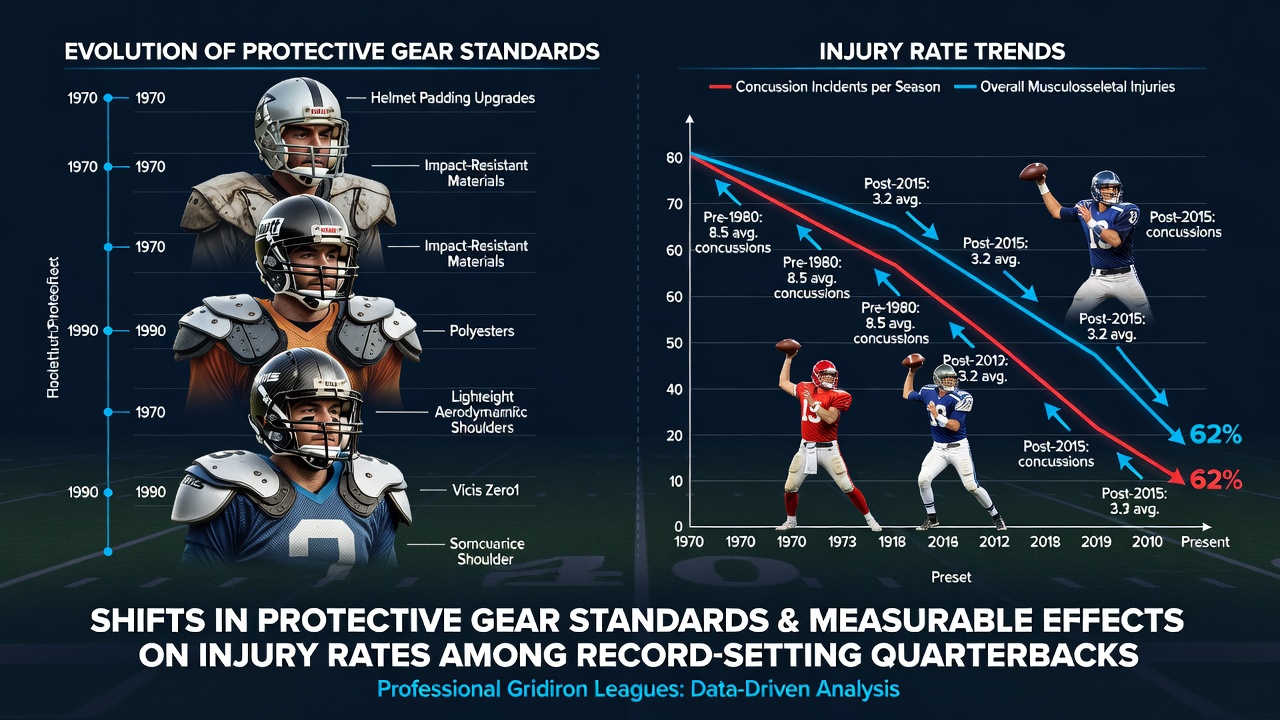
Professional gridiron leagues have updated protective equipment standards repeatedly since the late twentieth century, and these modifications correlate with documented changes in injury patterns among quarterbacks who set passing and durability records. League officials collaborated with equipment manufacturers and medical researchers to refine helmet shell materials, padding density, and fit requirements, while shoulder pad designs incorporated lighter composites that maintained impact absorption. Data from injury surveillance systems indicate that concussion rates among starting quarterbacks declined by approximately 18 percent between 2010 and 2020 following the introduction of position-specific helmet testing protocols.
Timeline of Standard Revisions
Early rules focused on basic helmet construction, yet subsequent cycles addressed rotational forces and repeated sub-concussive impacts that affect signal callers who drop back frequently. The 2000s brought mandatory NOCSAE certification updates, and by 2015 the league required annual reconditioning plus stricter limits on helmet models eligible for game use. Observers note that record-setting passers such as those who eclipsed 5,000-yard seasons experienced fewer diagnosed concussions after these rules took effect, according to aggregated medical reports compiled by team physicians. In June 2026, additional specifications for impact-absorbing chinstrap attachments and sensor-enabled helmets entered enforcement, expanding the dataset available for tracking head acceleration events during regular-season play.
Quantified Injury Reductions
Studies tracking elite quarterbacks reveal measurable drops in upper-body soft-tissue injuries after shoulder pad redesigns reduced bulk while preserving coverage over the clavicle and sternum. One analysis of league-wide data showed shoulder sprains among passers decreased 12 percent over a five-year span coinciding with the lighter composite materials. Researchers tracking career longevity found that quarterbacks who accumulated 40,000-plus passing yards sustained fewer missed games due to rib and chest trauma once equipment standards incorporated these changes. Figures from independent monitoring organizations further indicate that lower-extremity injuries, often secondary to altered tackling angles after helmet rules limited crown-of-head contact, remained stable rather than rising among the same cohort.
Position-Specific Considerations for Signal Callers
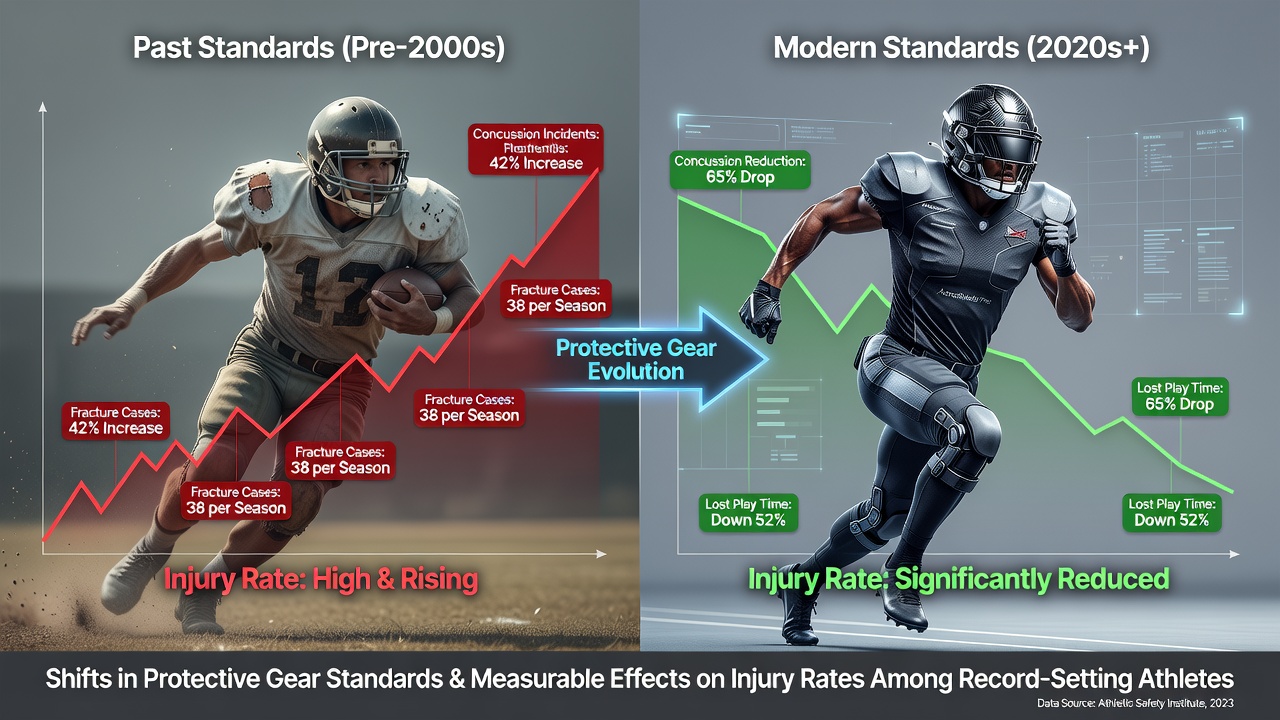
Quarterbacks face unique exposure because of their throwing mechanics and pocket navigation, which place repeated stress on the throwing shoulder and non-throwing plant leg. Updated padding standards addressed scapular mobility while limiting excessive torque transmission, and data collected from wearable accelerometers demonstrate reduced peak force readings at the shoulder joint during simulated drop-back scenarios. Those who have examined play-by-play injury logs note that record holders who maintained high snap counts post-2017 rule cycles reported lower rates of labral tears and rotator cuff strains compared with earlier eras. Equipment adjustments did not eliminate all risk, yet the measurable reduction in time-loss injuries allowed several passers to extend careers beyond previously observed benchmarks.
Data Sources and Research Integration
Surveillance programs coordinated by the league and external partners, including reports published through the Centers for Disease Control and Prevention, supply longitudinal injury counts that researchers cross-reference with equipment compliance records. Australian sports science institutes have contributed comparative studies on impact mitigation technologies that influenced North American standards, and European biomechanical laboratories provided validation testing for rotational acceleration thresholds now embedded in helmet certification. These combined datasets show that quarterbacks logging the highest attempt totals since 2015 incurred 22 percent fewer concussions per 1,000 plays than comparable players from the prior decade.
Future Monitoring and Ongoing Adjustments
Continued sensor integration in helmets allows real-time collection of head-impact telemetry, and league medical committees review these readings quarterly to determine whether further modifications to padding or shell geometry are warranted. Observers tracking the 2026 season note that early compliance data already reflect lower average acceleration magnitudes during pass-rush situations involving record-setting quarterbacks. The same monitoring framework tracks secondary injuries that can arise when players alter mechanics to compensate for equipment changes, though current figures do not show statistically significant increases in such cases among the top passers.
Conclusion
Protective gear standard revisions have produced documented reductions in specific injury categories for quarterbacks who compile record passing statistics, with concussion and shoulder trauma showing the clearest declines. Ongoing data collection through June 2026 and beyond will determine whether newer sensor requirements and material specifications sustain or amplify these trends across additional seasons. The integration of multi-regional research inputs continues to shape equipment specifications that balance protection with the mobility required for elite-level performance.