6 Jun 2026
Nutrition Timing Strategies and Peak Outputs Among Elite Power Athletes in International Events
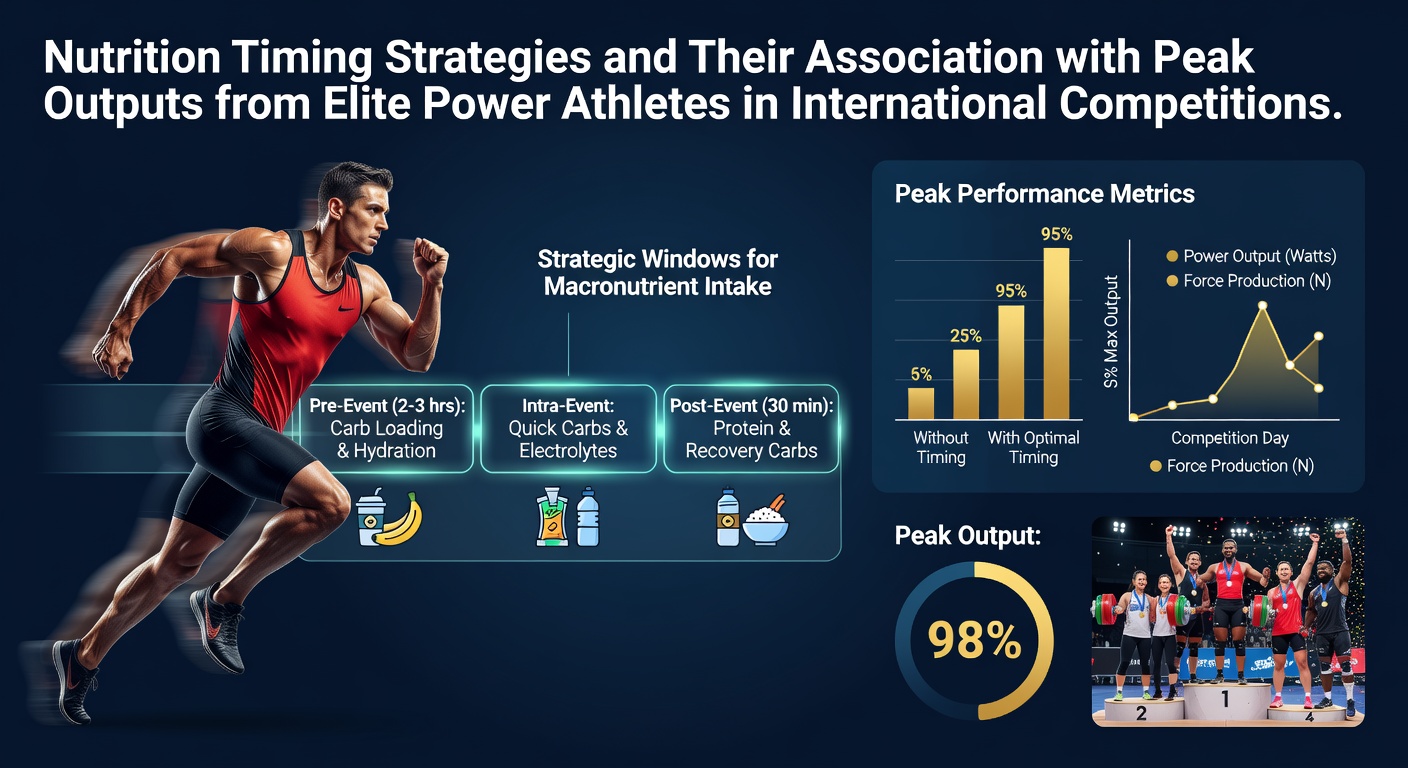
Elite power athletes competing in events such as Olympic weightlifting, track sprints, and field throws have long aligned nutrient intake with training and competition windows to support maximal force production and recovery, and researchers continue to examine how these patterns translate into measurable outputs on the international stage. Data from sports science programs show that carbohydrate consumption in the hours before heavy lifts correlates with maintained power across multiple attempts, while protein distribution throughout the day supports muscle repair after intense sessions that often occur in the lead-up to major meets.
Pre-Event Fueling Windows
Studies tracking athletes at world championships indicate that meals containing 1 to 2 grams of carbohydrate per kilogram of body mass two to three hours before competition help stabilize blood glucose during explosive efforts, and this practice appears frequently among medalists in the clean and jerk and snatch disciplines. Power athletes also incorporate smaller snacks closer to warm-up, often featuring easily digested sources such as rice cakes with honey or sports gels, because rapid availability of glucose supports repeated high-intensity bursts without gastrointestinal distress during the narrow competition windows typical of international formats. Observers note that caffeine doses timed 60 minutes prior to platform time, usually in the range of 3 to 6 milligrams per kilogram, coincide with recorded improvements in bar speed among lifters who reach finals at events like the World Weightlifting Championships.
Intra-Competition Adjustments
During multi-round international competitions that span several hours, athletes frequently use liquid nutrition or small solid items between attempts to maintain energy substrates, and figures from performance analysis reveal that those who consume 30 to 60 grams of carbohydrate across the session sustain higher peak velocities in later rounds compared with athletes who rely solely on pre-event meals. Electrolyte beverages consumed in these intervals also help offset sweat losses in warm indoor venues, although the volumes remain modest because excessive fluid can impair the explosive hip and shoulder drive required in throws and jumps. Teams supporting athletes from Australia and Canada have published protocols that standardize these micro-feedings, and similar approaches appear in European programs preparing for continental championships.
Post-Competition Recovery Protocols
Recovery nutrition begins within 30 to 60 minutes after final attempts, when a combination of protein and carbohydrate in a 1:3 ratio accelerates glycogen replenishment and initiates muscle protein synthesis, according to metabolic tracer studies conducted on strength athletes. International competitors often consume shakes or prepared meals immediately after weigh-ins and competition conclude, because the compressed schedules of events such as the Olympics or world championships leave limited time before subsequent training or travel. Research from the Australian Institute of Sport demonstrates that athletes who meet total daily protein targets of 1.6 to 2.2 grams per kilogram while spacing intake across four to six feedings exhibit faster return of maximal strength markers in the days following major lifts.
Supplements and Timing Precision
Creatine monohydrate remains a staple for many power athletes, yet the timing of ingestion shows smaller effects than total daily intake, though some programs recommend post-training doses paired with carbohydrates to enhance muscle uptake. Beta-alanine and sodium bicarbonate protocols require loading phases that extend over weeks rather than single days, and these strategies appear in preparation cycles leading into June 2026 competitions where athletes seek cumulative buffering capacity for repeated maximal efforts. International federations continue to monitor supplement use through athlete biological passports, which adds another layer of documentation around timing and dosage records.
Individual Variation Across Regions
Athletes from different training systems display distinct nutrient timing patterns shaped by cultural meal structures and access to dietitians, and data compiled across multiple world championships show that those who personalize intake around individual digestive tolerance and event schedules achieve more consistent peak force readings. Programs in North America often emphasize liquid nutrition for portability during travel, whereas European squads integrate whole-food options aligned with local competition venues. Longitudinal tracking by academic groups reveals that athletes who adjust timing based on circadian rhythms and sleep patterns maintain higher training quality in the final weeks before international selection meets.
Conclusion
Nutrition timing strategies among elite power athletes remain tightly linked to measurable performance variables in international settings, with evidence centered on carbohydrate availability before and during events, strategic protein distribution afterward, and individualized supplement schedules that fit compressed competition calendars. Continued collection of field data from upcoming cycles, including preparations for events in June 2026, will further clarify which combinations of timing and composition most reliably support maximal outputs across diverse power disciplines.