27 Jul 2026
Material Upgrades in Hockey Sticks and Their Connection to Shot Velocity Records in Professional Ice Hockey Seasons
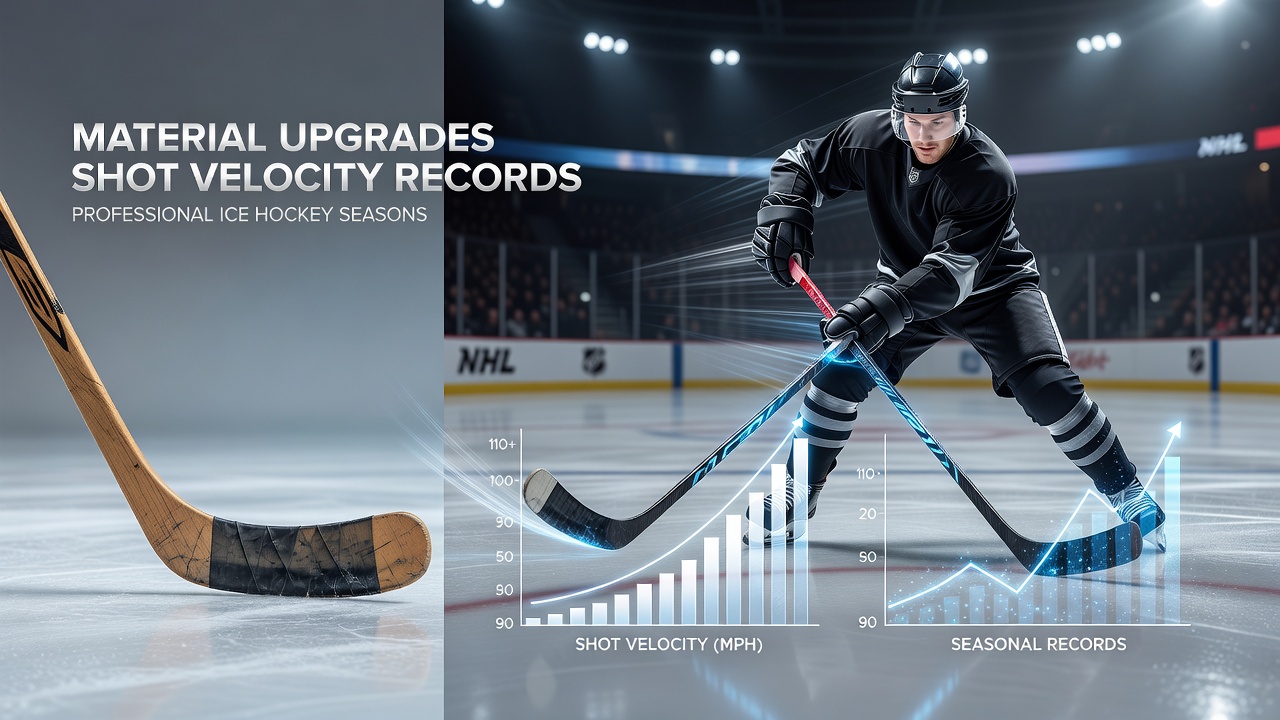
Professional ice hockey has seen stick construction shift from traditional wood laminates to advanced composites over multiple decades, and those changes align with documented increases in slapshot and wrist shot speeds across NHL seasons. Early wooden sticks delivered consistent flex patterns but added weight that limited energy transfer during the loading phase of a shot, whereas later materials reduced mass while maintaining or increasing stiffness in targeted zones.
Early Construction Methods and Performance Limits
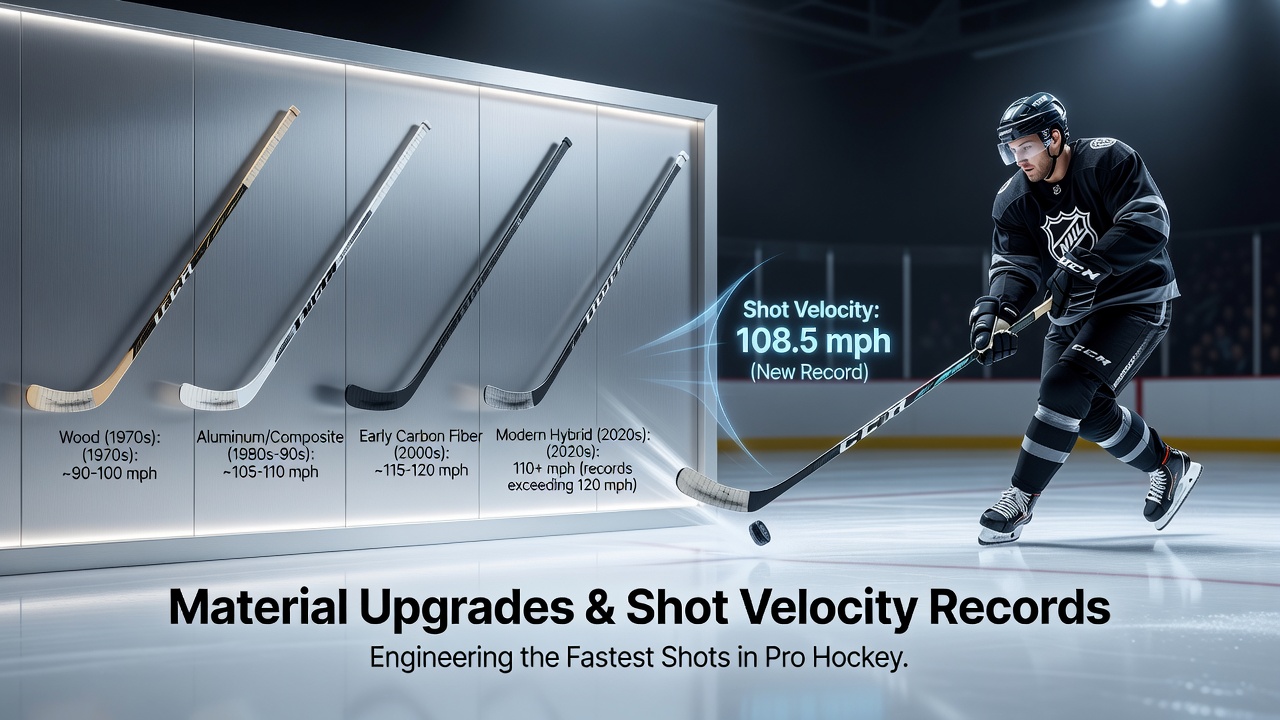
Manufacturers relied on ash, maple, and birch through the 1970s and 1980s, and players often taped multiple blades together to achieve desired lie angles. Data collected by league equipment managers showed average stick weights hovered near 650 grams during that period, and recorded slapshot velocities rarely exceeded 95 miles per hour in official testing sessions. The introduction of aluminum shafts in the late 1980s cut weight by roughly 150 grams per unit, yet vibration transfer remained high and blade durability suffered under repeated puck impacts.
Composite Materials Enter the Professional Game
Carbon fiber and fiberglass hybrids arrived in the mid-1990s, and teams began adopting one-piece designs that allowed engineers to vary resin content along the shaft length. A 1998 study from a Canadian university biomechanics lab measured energy return rates above 80 percent in early composite models compared with 60 percent in wooden predecessors. Shot velocity records began climbing steadily once players adjusted release timing to exploit the lighter swing weight, with several skaters surpassing 100 miles per hour in league-wide radar gun sessions by the 2002-03 season.
Key Material Innovations and Measured Velocity Gains
Subsequent refinements focused on nano-resin matrices and variable fiber orientations that create kick points closer to the blade. These adjustments produce faster snap-back after the stick bends against the ice, and independent testing facilities have recorded incremental gains of 2 to 4 miles per hour per generation of stick released. League records illustrate the trend: the 2010-11 season produced multiple verified slapshots above 105 miles per hour, and by 2019 the top mark reached 108.5 miles per hour during an official skills competition.
Blade core materials also evolved from simple foam to high-density syntactic foams layered with aramid reinforcements, and those changes improved puck spin rates that contribute to shot accuracy at higher speeds. Observers note that the combination of reduced overall mass and tuned torsional rigidity allows players to maintain control during the follow-through without sacrificing peak velocity.
Seasonal Data Patterns Across Professional Leagues
NHL tracking systems introduced in 2015 captured stick flex angles and release velocities for every shot attempt, and aggregated figures show a 3.2 mile per hour average increase in slapshot speed between the 2015-16 and 2022-23 seasons among players using the latest composite models. European leagues using similar radar setups reported parallel trends, although sample sizes remain smaller due to fewer standardized testing events. Equipment regulations introduced ahead of the 2024-25 season limited maximum shaft curvature, yet velocity records continued to rise because material stiffness improvements compensated for the geometric restriction.
Developments Reported in July 2026
In July 2026 manufacturers unveiled shafts incorporating graphene-infused prepreg layers that further reduce weight without compromising fatigue resistance, and initial independent tests conducted at North American training facilities indicated another potential 1.5 mile per hour gain under controlled conditions. Several NHL clubs placed early orders for the new construction ahead of training camp, and league statisticians plan to monitor whether the upgrades translate into updated record marks during the 2026-27 regular season skills competitions.
Biomechanical and Equipment Interaction Factors
Researchers tracking joint angles during slapshots have found that lighter sticks permit greater shoulder rotation before impact, which adds to the stored elastic energy released at release. The same studies link blade curvature changes enabled by stronger composite layups to higher puck rotation rates, and those rotations correlate with maintained velocity over longer distances on the ice surface. Professional equipment managers emphasize that proper shaft length and lie angle remain essential, because even advanced materials deliver suboptimal results when fit does not match player stance.
Conclusion
Material upgrades in hockey sticks have coincided with successive increases in verified shot velocities across professional seasons, and ongoing research continues to refine fiber placement and resin systems. Data collected by leagues and independent labs demonstrate consistent patterns between construction changes and performance metrics, while regulatory adjustments seek to balance innovation with safety considerations. The trajectory suggests further incremental gains remain possible as new compounds enter production cycles.