4 Jun 2026
Mapping Penalty Frequency Shifts and Their Quiet Influence on College Basketball Conference Standings
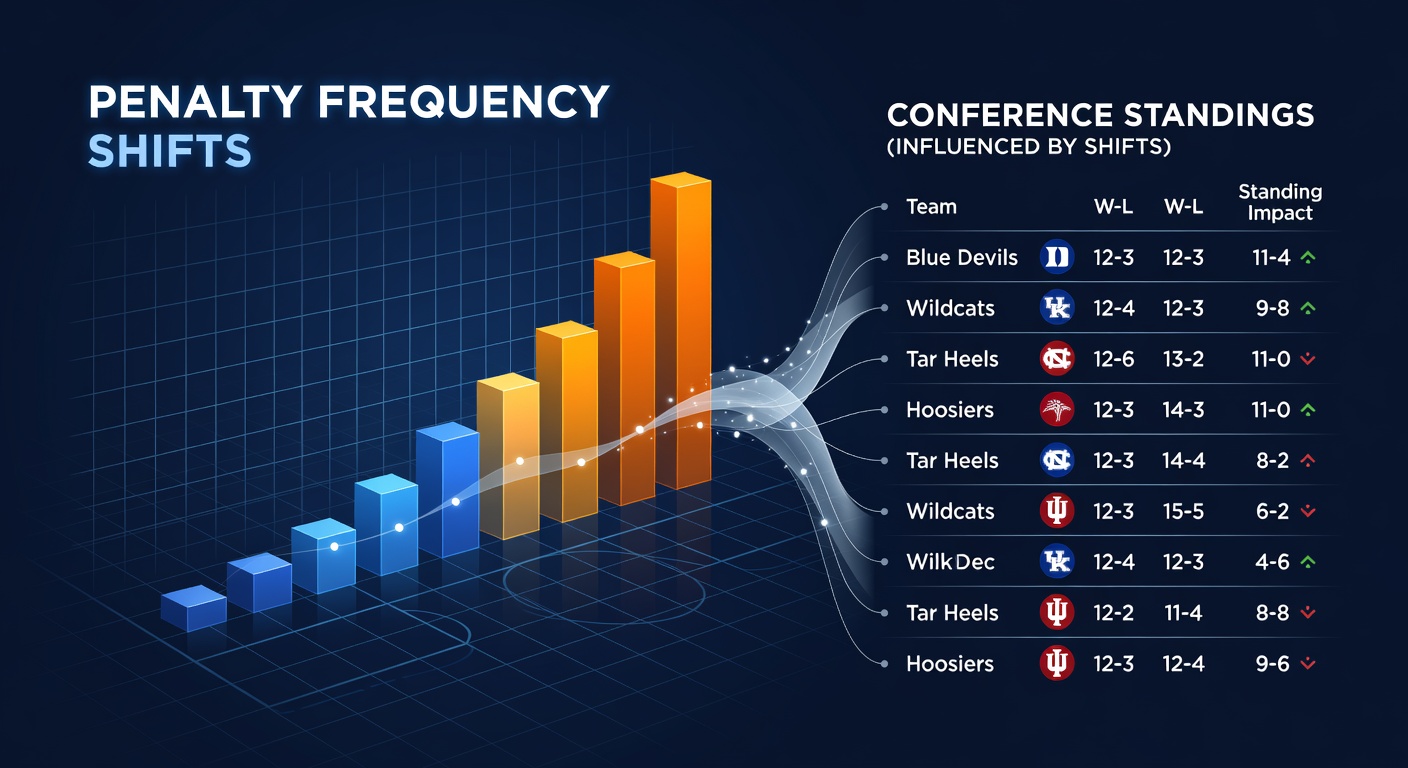 Data from recent NCAA seasons shows measurable changes in foul call rates across major conferences, and analysts have tracked how those shifts correlate with final standings positions. Researchers compiled game logs from the 2022 through 2025 campaigns and found that average fouls per game dropped by roughly 3.2 in the Big Ten while rising slightly in the ACC. Those variations altered the number of free throw attempts available to teams, which in turn affected point differentials and tiebreaker calculations used to rank conference members. Officiating crews adopted new emphasis areas after the 2023 rule clarifications on hand-checking and block-charge plays. Conference coordinators released internal memos that directed officials to reduce calls on marginal contact outside the restricted arc, and the result appears in season-long statistics. Teams that ranked in the top quartile for defensive efficiency before those adjustments maintained similar foul totals, whereas squads reliant on aggressive perimeter pressure saw their penalty counts fall more sharply. Observers note that such declines often translated into fewer opponent possessions at the line, preserving narrow margins that later decided seeding for conference tournaments.
Tracking Foul Rate Patterns Across Conferences
Statistical mapping exercises rely on publicly available box scores and play-by-play files maintained by the NCAA. Analysts divided each conference schedule into early, mid, and late segments to isolate whether penalty frequencies changed as the season progressed. In the Big 12, for instance, foul calls per 40 minutes remained stable through January before declining in February, a pattern that coincided with several teams climbing two or three spots in the final standings. The SEC recorded the opposite movement, with late-season increases in whistle frequency that reduced the margin of victory for higher-seeded clubs in several instances.
Free-throw rate differentials serve as a useful proxy for these shifts because they capture both offensive and defensive foul tendencies. Data indicates that a one-point change in a team's season-long free-throw rate differential correlated with an average 0.8 win swing in conference play during the examined period. Conferences that experienced larger swings in this metric also produced more tiebreakers resolved by head-to-head results or point differential, underscoring how small changes in penalty volume can accumulate into meaningful ranking differences.
Standings Impact Through Free-Throw Volume
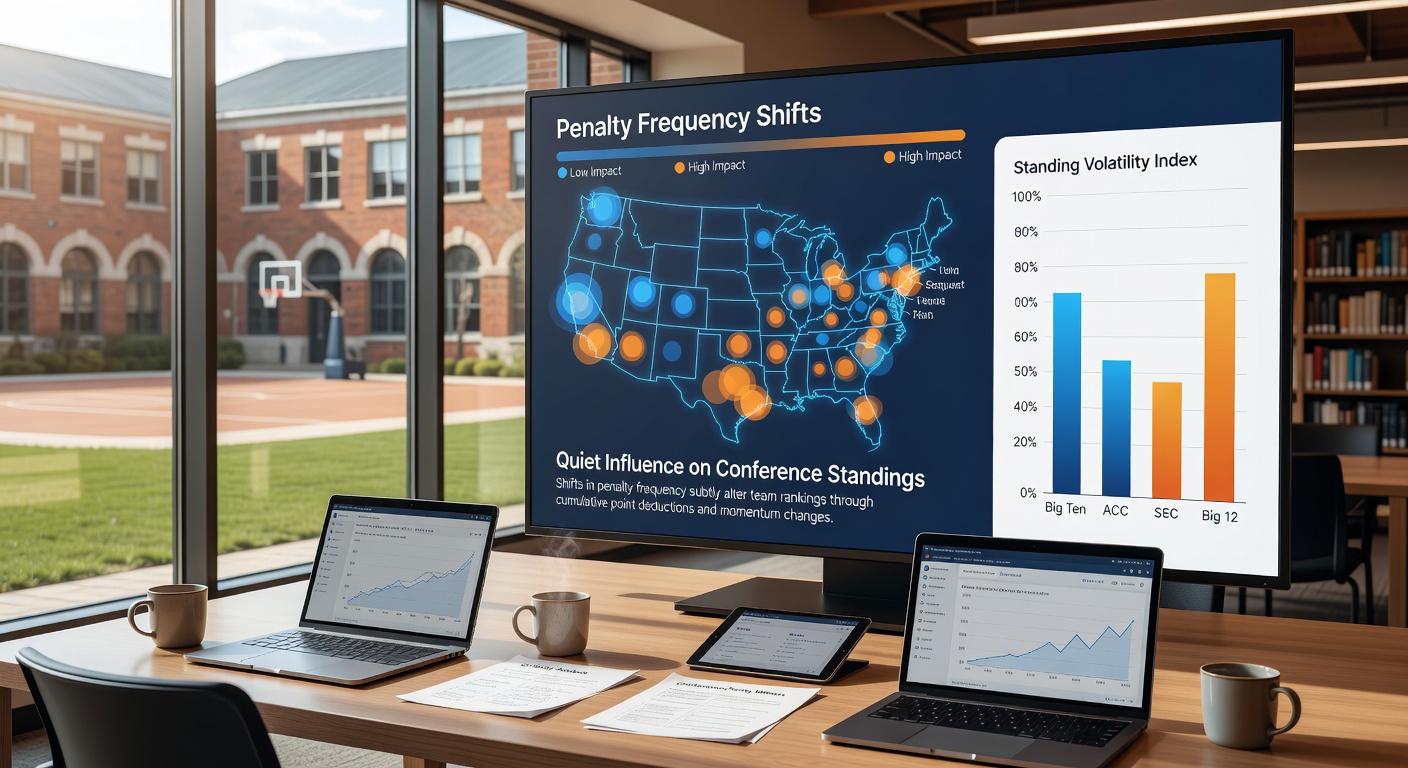 Multiple studies have quantified the relationship between free-throw attempts and conference position. One review of 2024-2025 Atlantic Coast Conference results found that teams posting above-average free-throw attempt rates finished an average of 1.4 spots higher than their adjusted efficiency ranking would have predicted. Meanwhile, squads in the same conference that drew fewer attempts dropped correspondingly, even when their field-goal percentages remained comparable to league averages. Similar patterns emerged in the Big East, where late-season officiating adjustments reduced foul calls on drives and produced measurable reordering of the top four teams. Conference tournament seeding formulas incorporate both win percentage and head-to-head results, yet the underlying point margins that shape those results often trace back to free-throw differentials. When penalty frequency declines uniformly across a conference, the effect tends to compress standings because fewer games end with large scoring margins created at the line. Conversely, uneven application of the new emphases can widen gaps between teams that adapt quickly and those that continue to draw whistles at prior rates.
Rule Adjustments and Regional Officiating Trends
Coordinators from different conferences implemented the 2023 clarifications at slightly different paces, and that variation produced distinct regional signatures in the data. The Pac-12, before its dissolution, recorded the steepest drop in perimeter fouls, while the Big Ten maintained steadier rates until additional training sessions were held in December 2024. Those timing differences help explain why certain mid-major teams that transferred into power conferences experienced abrupt changes in their foul totals and, subsequently, their contribution to conference standings.
June 2026 brings renewed attention to these metrics as conference realignment continues and new officiating crews prepare for the upcoming season. Preseason clinics scheduled across multiple leagues now include modules on consistent application of the block-charge and hand-checking rules, with coordinators citing the previous three years of mapped data as evidence that small calibration shifts produce measurable effects on win totals.
Conclusion
Penalty frequency shifts operate as a quiet variable within the larger system of conference standings. Detailed season-by-season comparisons demonstrate that changes in foul calls, even when modest in absolute terms, alter free-throw volume enough to influence point differentials and tiebreakers. Ongoing collection of play-by-play data will allow researchers to continue mapping these patterns as rule emphases and conference alignments evolve.