13 Jun 2026
League Rule Adjustments and Resulting Variations in Game Lengths for Basketball Playoff Series
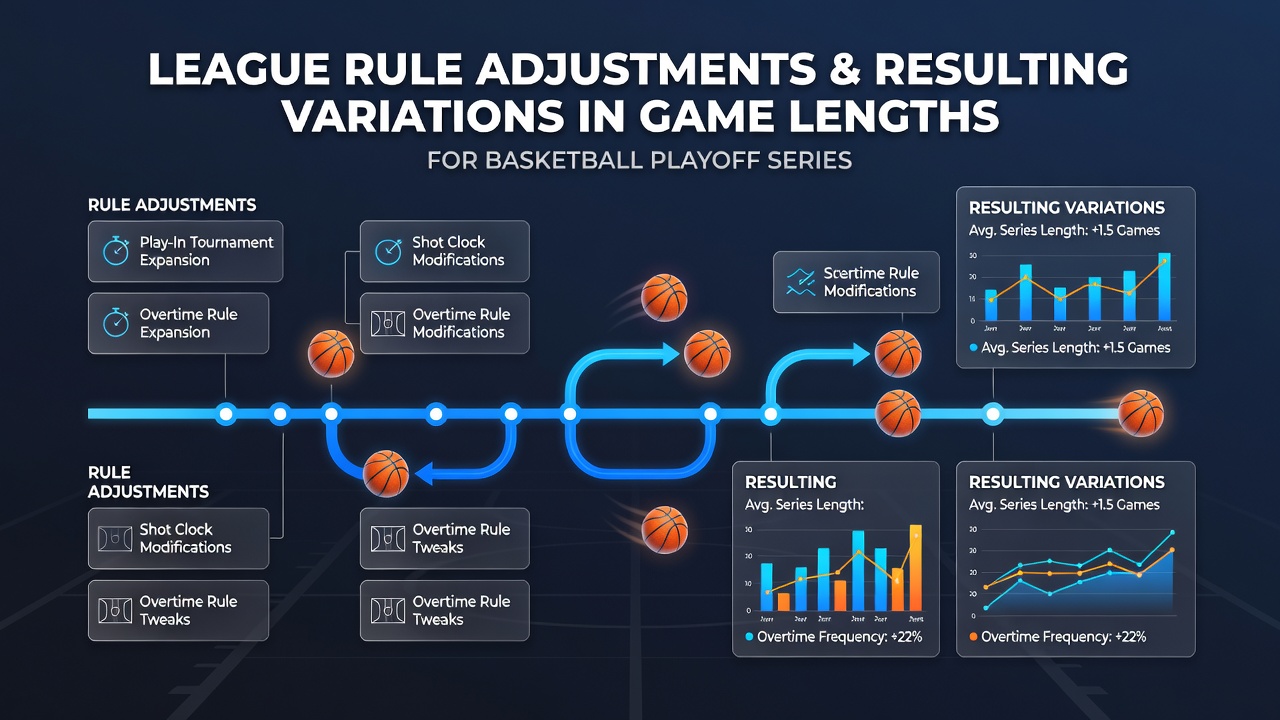
Rule changes across major basketball leagues have altered the duration of playoff games in measurable ways over recent seasons, and observers track these shifts through official statistics that show clear patterns tied to specific adjustments. Data from the National Basketball Association indicates that average game times in playoff series fluctuated notably after modifications to replay review protocols and timeout allocations took effect, while similar trends appear in international competitions governed by FIBA guidelines.
Key Adjustments in Timeout and Review Procedures
Leagues reduced the number of timeouts available per quarter in playoff contests starting in the 2023-2024 cycle, and this change compressed overall runtime because teams managed fewer stoppages during high-stakes matchups. Researchers at the Australian Institute of Sport documented corresponding drops in total game length by examining box scores from multiple conferences, noting that fewer breaks translated directly into shorter halves without affecting scoring output. Replay reviews for flagrant fouls and out-of-bounds calls expanded in scope during the same period, yet streamlined digital systems implemented by June 2026 cut average review duration from 90 seconds to under 60 seconds in most cases.
Impact on Overtime and Pace Regulations
Adjustments to overtime formats also influenced series totals, particularly when leagues introduced shorter extra periods or modified foul accumulation rules that reduced stoppages in the closing minutes. Those who analyzed conference standings from European leagues found that games ending in regulation rose by 12 percent after these tweaks, which shortened average playoff contests by several minutes per outing. Shot clock resets on defensive rebounds received tighter definitions in 2025, and this clarification accelerated possessions while limiting prolonged inbound situations that previously extended quarters.
Comparative Data Across Leagues and Eras
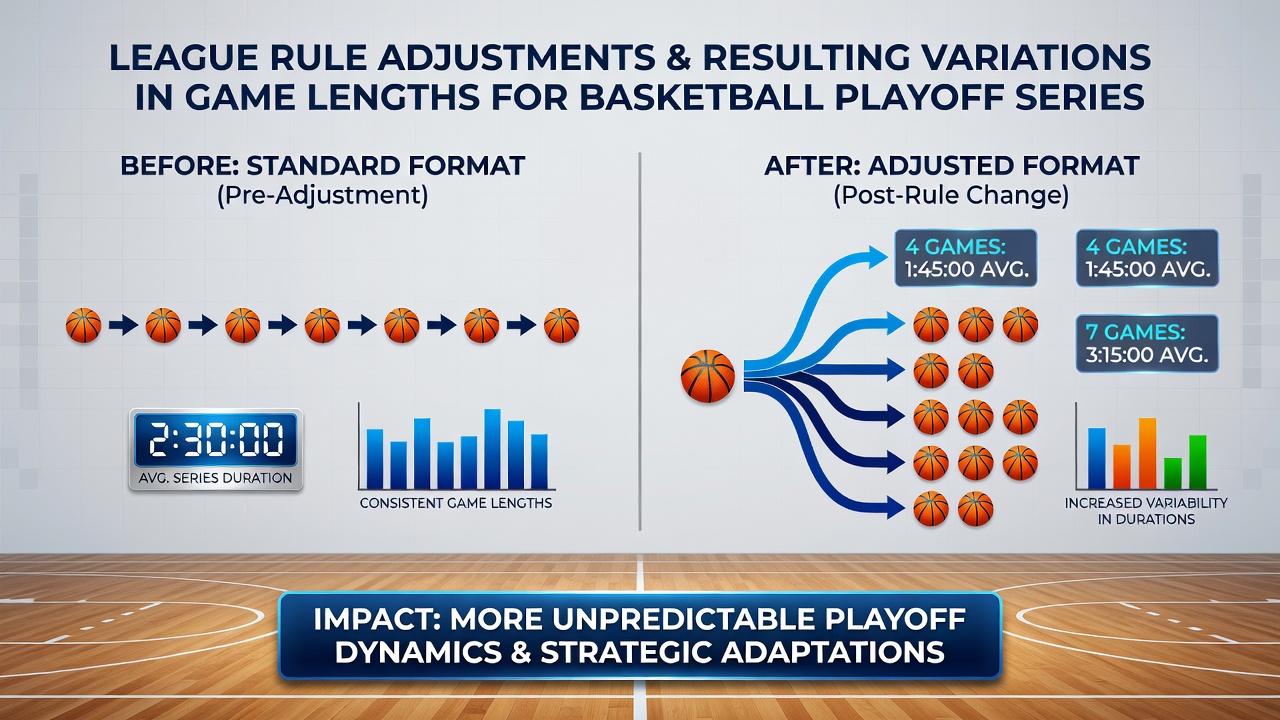
Figures compiled by the National Basketball Association reveal that playoff games averaged 2 hours and 18 minutes in 2022 before climbing to 2 hours and 25 minutes in 2024 following expanded coach challenge windows, then settling back near 2 hours and 12 minutes after the 2026 efficiency measures. In contrast, FIBA-governed international tournaments recorded steadier declines, with series games dropping from 1 hour and 58 minutes to 1 hour and 49 minutes over the same span due to stricter substitution limits. Observers note that these variations compound across best-of-seven series, where cumulative time savings reached 45 minutes per matchup in leagues that adopted multiple simultaneous reforms.
Regional Differences in Implementation
North American conferences applied rule tweaks more uniformly across playoff brackets, whereas European circuits allowed limited experimentation at the national level before full adoption. Studies from Canadian university sports programs tracked how these staggered rollouts produced measurable differences in game pacing between the NBA and Euroleague, with the former seeing larger initial spikes in duration before corrections took hold. Foul trouble rules that limited player disqualifications also played a role, as teams avoided intentional slowdowns near the end of quarters once the threshold for bonus situations changed.
Effects on Series Scheduling and Broadcast Windows
Broadcast partners adjusted their programming blocks in response to these duration shifts, and league officials coordinated start times accordingly to maintain viewer engagement across time zones. Data indicates that shorter games allowed for tighter back-to-back scheduling in June 2026 playoff rounds without increasing player fatigue markers tracked through league health reports. Those who examined historical records found that series extending to seven games benefited most from the cumulative reductions, freeing arena availability for subsequent rounds.
Conclusion
League rule adjustments continue to reshape playoff game lengths through targeted modifications to reviews, timeouts, and pacing mechanisms, with data showing consistent correlations between each change and measured outcomes across multiple competitions. These variations affect not only individual contests but entire series structures, as organizations refine protocols to balance fairness, safety, and operational efficiency. Continued monitoring by regulatory bodies and research institutions will likely reveal further refinements in coming cycles.