6 Jul 2026
How Pitch Maintenance Routines Across Continents Have Quietly Altered Dribbling Success Rates in Global Soccer Fixtures
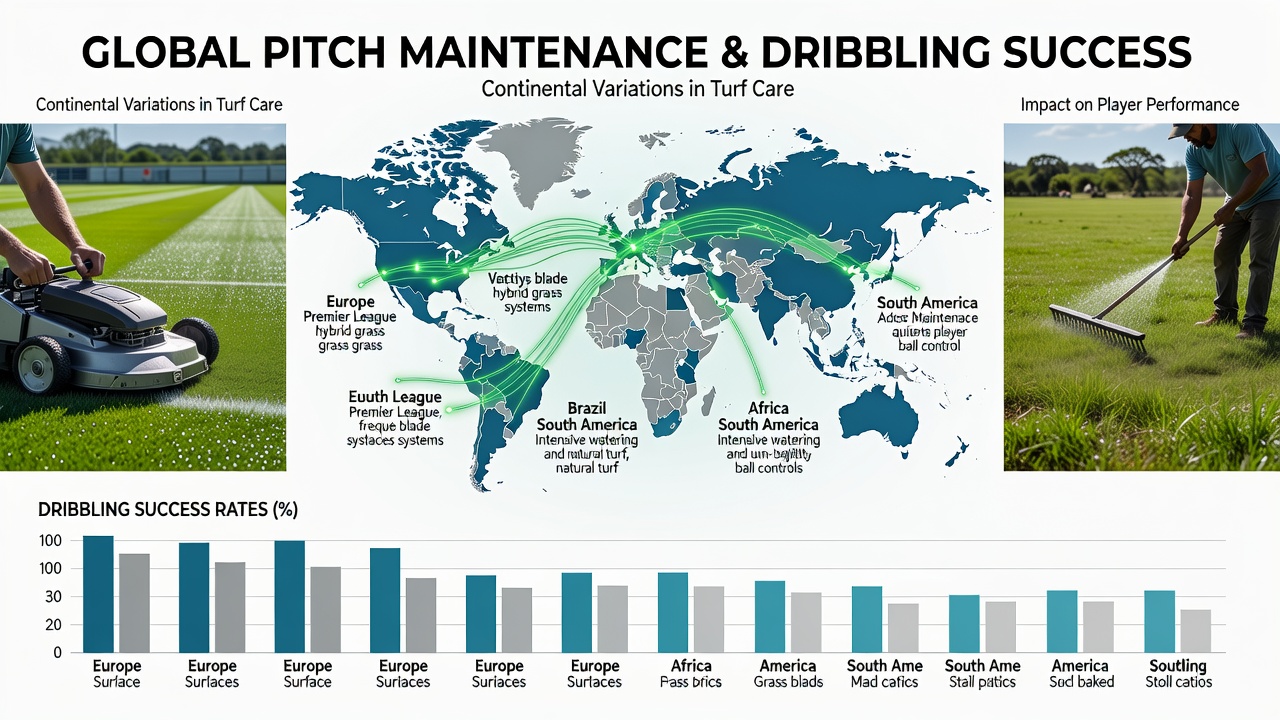
Grounds crews manage soccer pitches differently depending on regional climate, grass species, and league regulations, which produces measurable shifts in how the ball behaves during matches. Shorter, firmer surfaces common in parts of Europe allow quicker ball roll and tighter player control, whereas longer or softer turf prevalent across South American and African venues tends to slow the ball and demand adjusted dribbling techniques. Data collected from multiple domestic leagues shows these surface variations correlate with changes in successful dribble completion rates tracked by official match statistics providers.
Regional Differences in Turf Management Practices
European clubs often follow strict mowing schedules that keep grass heights between 20 and 25 millimeters, combined with frequent aeration and sand top-dressing to maintain consistent firmness. These routines create surfaces where the ball travels faster along the ground, enabling attackers to execute close-control dribbles at higher speeds. In contrast, many South American pitches use a mix of Bermuda and native grasses maintained at 28 to 35 millimeters, with less aggressive rolling and more reliance on natural rainfall patterns that produce variable moisture levels. Observers tracking CONMEBOL competitions note that such conditions increase the time defenders have to react, resulting in lower dribble success percentages during transition phases.
African venues present additional variables because of extreme temperature swings and water availability. Stadiums in South Africa and Nigeria frequently employ hybrid grass systems that receive targeted irrigation only during cooler evening hours, which leaves morning surfaces firmer while afternoon matches occur on slightly softer ground. Researchers from the University of Pretoria have documented how these daily cycles affect ball bounce and roll distance, directly influencing the types of dribbling maneuvers players attempt in domestic and continental fixtures.
Statistical Patterns in Dribbling Outcomes
League-wide metrics compiled between 2022 and 2025 reveal consistent regional differences. Teams in the English Premier League and Bundesliga record dribble success rates averaging 62 to 65 percent on their shorter, well-drained pitches, while comparable figures from Brazil's Série A and Argentina's Primera División sit between 54 and 57 percent. The gap widens further when examining progressive carries into the final third, where European surfaces support higher completion percentages because the ball maintains momentum over longer distances. Analysts attribute part of this disparity to maintenance schedules rather than solely to player skill or tactical style.

North American Major League Soccer pitches occupy an intermediate position. Many venues use Kentucky bluegrass blends kept at 25 millimeters with extensive subsurface drainage, producing conditions closer to European standards yet still influenced by the variable weather across the continent. Matches played in July 2026 at venues preparing for the expanded FIFA World Cup will test whether standardized pre-tournament maintenance protocols narrow these historical differences in dribbling efficiency.
Equipment and Technique Adjustments by Players
Coaching staffs respond to surface conditions by modifying both player instructions and boot selection. On firmer European pitches, players favor lighter boots with shorter studs that allow quicker directional changes during dribbles. Softer or longer grass prompts a shift toward boots with longer, wider studs that provide better grip while reducing the risk of the ball getting caught underfoot. Video analysis from UEFA and CONMEBOL competitions shows that attackers adjust their first touch angle and body orientation based on expected roll speed, a tactical adaptation that becomes visible in aggregated touch data released after each match round.
Climate also dictates seasonal maintenance cycles. Northern European leagues reduce irrigation during winter months to prevent frost damage, which temporarily hardens surfaces and slightly elevates dribble success rates in December fixtures compared with September. Southern hemisphere leagues experience the opposite pattern during their summer periods, when increased watering softens pitches and correlates with measurable drops in completed take-ons per 90 minutes.
Future Standardization Efforts
International governing bodies continue to examine whether uniform pitch specifications could reduce outcome variability. FIFA technical reports outline recommended grass heights and firmness ranges for World Cup venues, yet domestic leagues retain flexibility to match local conditions and budgets. As preparations advance toward the 2026 tournament across North America, several host cities have already implemented hybrid turf systems designed to deliver more consistent ball roll while accommodating multiple sports uses throughout the year.
Conclusion
Pitch maintenance routines therefore function as an underappreciated variable that shapes dribbling statistics across global competitions. Differences in grass height, irrigation timing, aeration frequency, and grass species produce measurable effects on ball behavior that appear in official match data. Teams and players adapt their equipment and techniques accordingly, while ongoing efforts toward greater standardization aim to balance local practicality with competitive equity in upcoming international events.