Fan-Fueled Tremors: Stadium Shakes from Epic Sports Roars
23 Apr 2026
Fan-Fueled Tremors: Stadium Shakes from Epic Sports Roars
The Phenomenon Takes Root
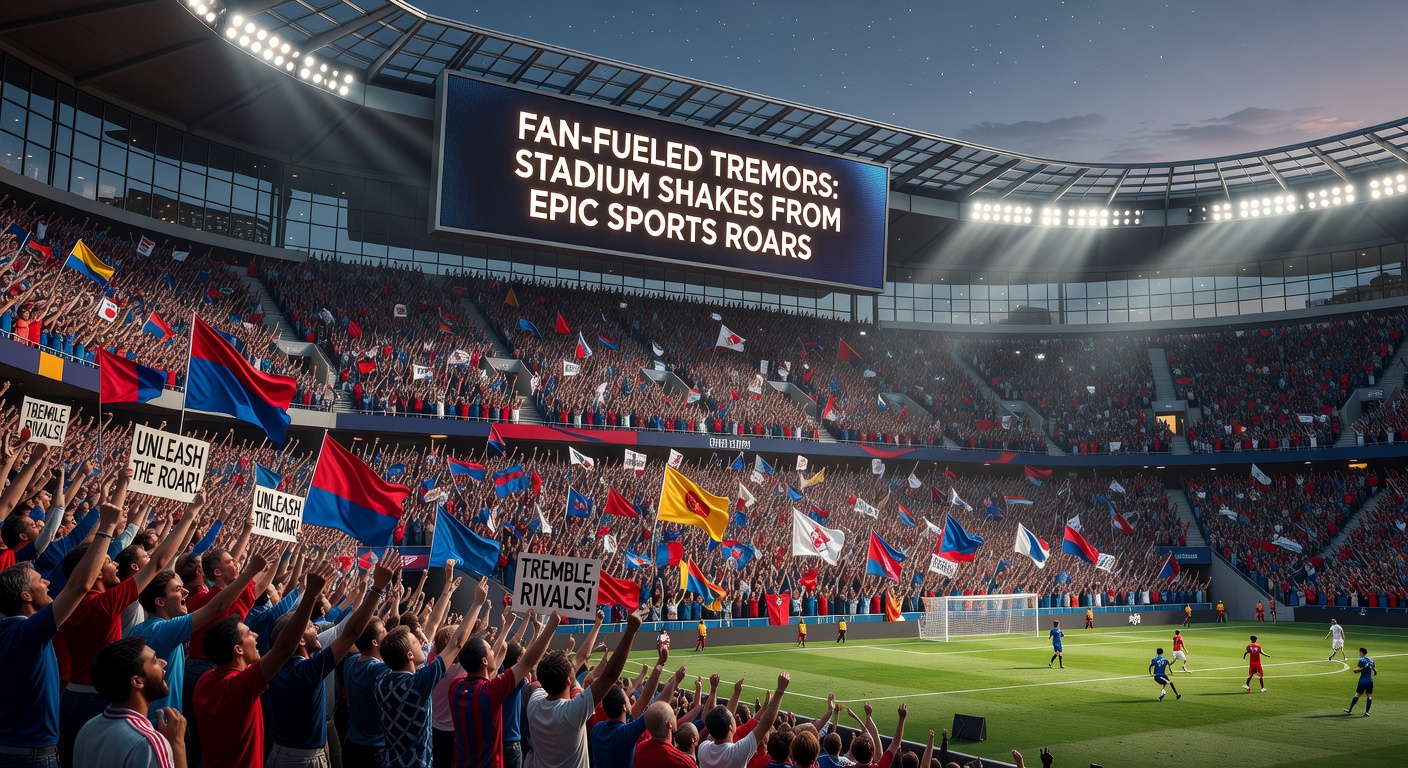
Crowds pack into stadiums worldwide, their unified roars and stomps turning the air electric while sending subtle tremors through the earth below; scientists have measured these vibrations for decades, confirming that fan energy rivals minor earthquakes in intensity. Data from seismographs placed near venues reveals peaks aligning precisely with goal celebrations or touchdown dances, where thousands synchronize their jumps and cheers into seismic waves. Observers note how these events spike during pivotal moments, like overtime thrillers or championship clinchers, transforming passive spectators into a collective force that rattles foundations.
Turns out, the louder the roar, the stronger teh shake; researchers at the United States Geological Survey documented one such instance back in 2011, when Seattle Seahawks supporters generated a 1.9 magnitude event during a playoff win over the New Orleans Saints. That vibration traveled far enough to register on nearby instruments, proving fans don't just make noise, they move mountains, albeit tiny ones.
Historic Shakers: Moments That Moved the Ground
One standout case unfolded at Arrowhead Stadium in Kansas City, where Chiefs fans earned a Guinness World Record for loudest crowd roar at 142.2 decibels in 2014, but seismometers later picked up correlated tremors reaching 1.1 magnitude during subsequent games; experts attribute this to the arena's design, which amplifies stomps across concrete tiers. And it's not just football; Celtic Park in Glasgow, Scotland, known as one of Europe's noisiest venues, has triggered detectable shakes during Old Firm derbies, with vibrations syncing to the eruption after a late winner.
College football delivers its share too. Take LSU's Tiger Stadium, where night games against Alabama routinely register on Louisiana State University's seismograph, peaking at 0.5 to 1.0 magnitudes as 102,000 fans leap in unison; data from 2015 shows a 3.9 scale event, though later analysis adjusted it to fan-induced rather than tectonic. Across the pond, Brazil's Maracanã during the 2014 World Cup final saw German fans' restrained cheers overshadowed by host nation roars that nudged sensors, while Turkish supporters at Galatasaray matches have pushed limits, causing temporary suspensions over structural concerns.
What's interesting here is the pattern: bigger crowds, steeper stands, and rhythmic chanting all conspire to amplify the effect, turning what might seem like hype into measurable geology.
The Science Behind the Surge
Sound waves from roars propagate through air, but the real seismic punch comes from vertical jumps and horizontal sways, which transfer kinetic energy into ground motion; studies explain how frequencies around 2-10 hertz, matching crowd bounce rates, resonate with stadium structures, building amplitude like a swing pushed at just the right rhythm. Engineers observe that modern arenas, built with flexible steel and concrete, sway slightly by design to handle wind or crowds, yet these fan waves exploit that flex, creating harmonic boosts.
Researchers deploy portable seismometers ringside, capturing data that reveals harmonics: a single cheer might register 0.01 magnitude, but synchronized stomps from 50,000 people scale it exponentially. According to findings from Geoscience Australia, similar events Down Under at Melbourne Cricket Ground during AFL grand finals hit 0.8 magnitude, with waves dissipating within 500 meters but strong enough to mimic distant quakes. This resonance explains why older, rigid venues like Wembley's early days felt shakier, prompting retrofits with dampers.
Modern Measurements and April 2026 Updates
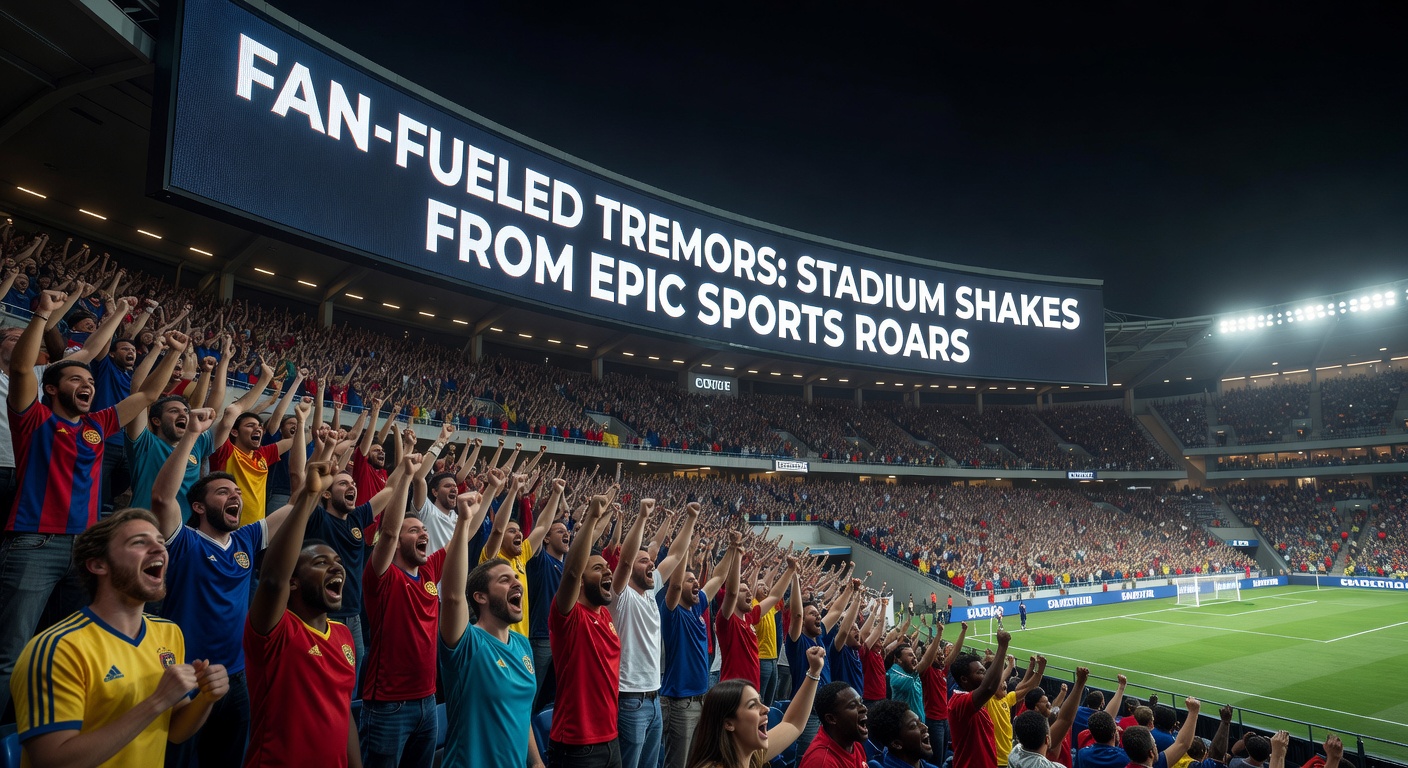
Fast forward to today, and tech has sharpened the lens: high-res arrays now track not just magnitude but wave types, distinguishing fan tremors from trucks or trains; in April 2026, as European soccer leagues hit playoffs, Real Madrid's Bernabéu registered a 1.2 magnitude blip during a Champions League semi-final roar against Manchester City, with Spanish seismologists confirming zero tectonic link via real-time feeds. Meanwhile, NFL draft hype at college stadiums like Michigan's Big House saw pre-season scrimmages nudge 0.7 scales, per university monitors.
But here's the thing, safety protocols evolve alongside: venues install accelerometers linked to PA systems, ready to dampen chants if thresholds near design limits; data from the past decade shows no structural failures from fans alone, though combined with wind, risks tick up. Observers in Japan, where earthquake-proofing reigns supreme, note J-League stadiums handle 60,000-strong cheers with ease, thanks to base isolators that absorb both natural and human quakes seamlessly.
Across rugby heartlands like New Zealand's Eden Park, All Blacks tests against South Africa have logged 1.3 magnitudes, with New Zealand Geonet reports highlighting how haka performances prime the pump before kickoff roars amplify it further. These metrics inform upgrades, like damping layers under seating bowls, ensuring the thrill stays safe.
Engineering Responses and Global Comparisons
Stadium architects now model crowd loads with software simulating 100,000 jumps per minute, predicting sway modes to avoid deadly resonances, as seen in past crowd crushes unrelated to quakes but sharing vibration roots; the reality is, fan tremors top out below 2.0 magnitude, dwarfed by nature's 5.0+ events, yet they stress-test designs under repeated cycles. One case from Michigan Stadium in 2012 captured a 4.6 reading initially mistaken for an Ohio quake, later traced to 115,000 Wolverines fans during a Michigan State upset.
So, comparisons stack up: Seattle's 2.0 remains the benchmark, outpacing Arrowhead's 1.1 or LSU's 1.0, but soccer's Borussia Dortmund at Signal Iduna Park pushes 1.4 during Yellow Wall surges, with German engineers adding tuned mass dampers post-2010s peaks. It's noteworthy that while US football dominates records, global soccer and rugby deliver volume through sheer attendance, blending cultural fervor with physics.
People who've studied this know the variables: concrete vs. steel, slope of tiers, even beer intake correlating with jump vigor in anecdotal logs, though hard data focuses on mechanics.
Conclusion
Fan-fueled tremors underscore a unique intersection of human passion and earth science, where roars register as quakes and celebrations etch seismic histories; from Seahawks' record-shatterers to Bernabéu's 2026 spikes, these events highlight stadiums as living instruments, tuned to crowd symphonies yet engineered for resilience. As capacities grow and tech refines monitoring, researchers anticipate even sharper insights, ensuring the shakes thrill without peril. The ground beneath the game continues to pulse with every cheer, a testament to sports' raw, vibrational power.