8 Jun 2026
Defensive Alignment Trends Among Sustained Title Contenders in North American Football Conferences
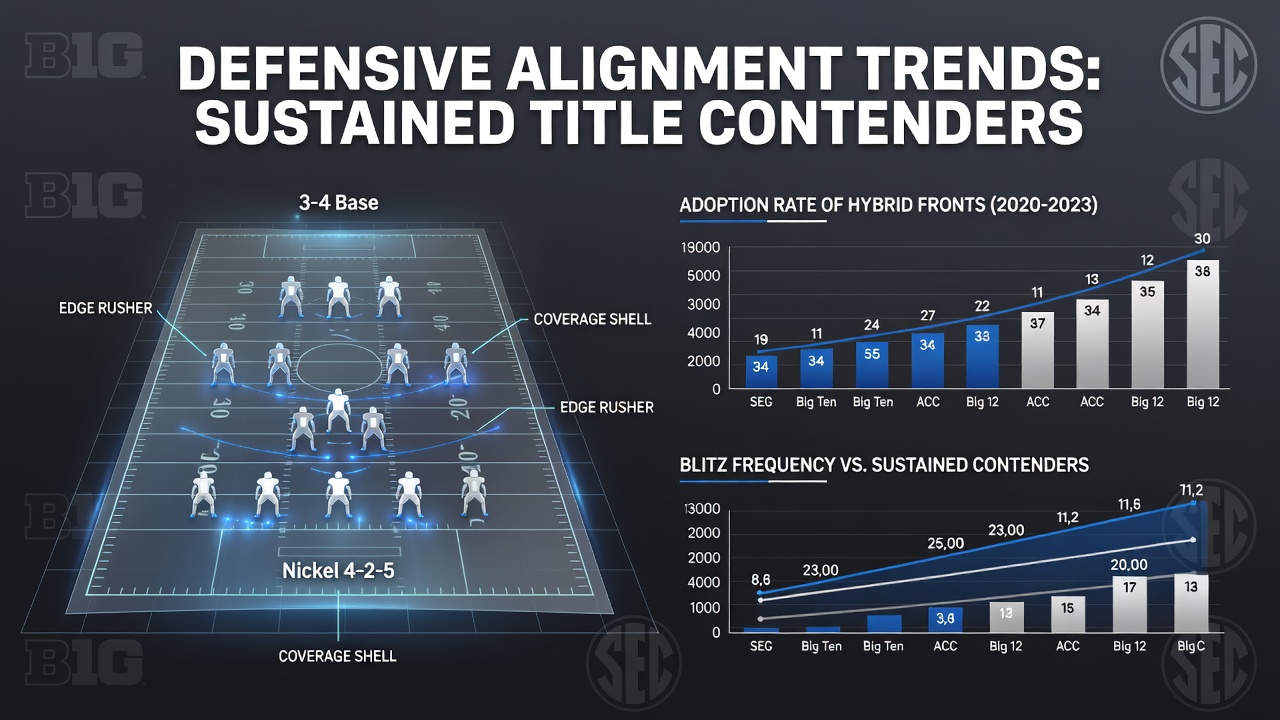
Defensive alignments in North American football have shifted noticeably among teams that maintain consistent contention for conference titles and national championships, particularly in leagues such as the NCAA Football Bowl Subdivision and the NFL, and observers tracking these patterns through the 2025 season note continued evolution heading into June 2026 offseason preparations.
Conferences including the Southeastern Conference and Big Ten have long featured programs that sustain elite defensive performance across multiple years, while data indicates these squads increasingly favor hybrid fronts over rigid traditional schemes, allowing them to adapt to varied offensive personnel packages without sacrificing structural integrity.
Core Shifts in Front Structures
Teams that reach conference championship games repeatedly have moved away from pure 4-3 or 3-4 bases toward multiple-front systems that rotate between even and odd alignments based on down and distance, and researchers from academic sports analytics programs have documented how this flexibility correlates with improved third-down conversion rates allowed.
Coordinators in sustained contenders deploy 3-4 under fronts more frequently in early downs to generate interior pressure while dropping into 4-3 over fronts on obvious passing situations, which creates mismatches against mobile quarterbacks common in modern spread offenses.
Secondary Adjustments and Coverage Trends
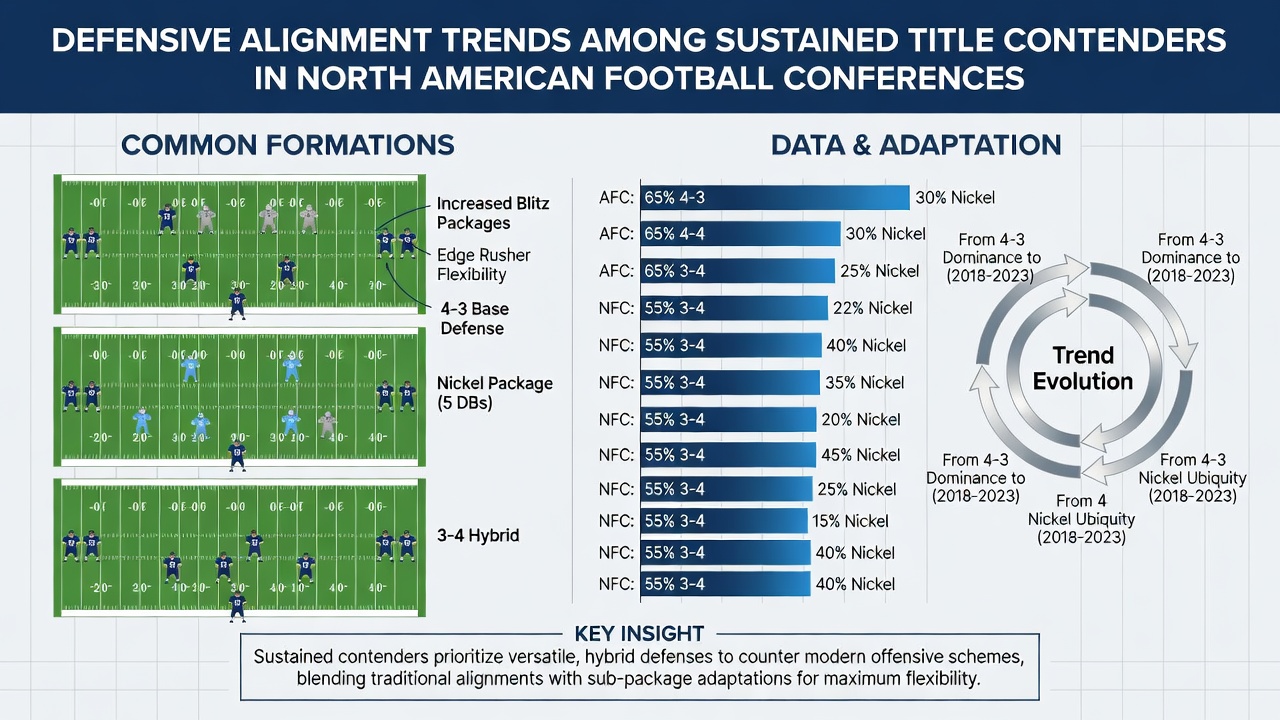
Nickel and dime personnel groupings appear in higher percentages of snaps among title contenders than among middle-tier conference teams, with two-high safety alignments gaining prominence to combat deep intermediate routes, and statistics compiled across recent seasons show these coverages reducing explosive play allowances in playoff-caliber defenses.
Yet the integration of simulated pressures from defensive backs has become standard practice, enabling sustained contenders to maintain coverage integrity while still disrupting timing routes, a development tracked closely by league-wide performance databases.
Conference-Specific Patterns
In the SEC, programs with repeated appearances in title contention lean heavily on 4-2-5 base defenses that emphasize speed at linebacker and safety positions, whereas Big Ten contenders more often retain elements of traditional 3-4 schemes augmented by stand-up edge defenders, and comparative studies reveal both approaches yield similar red-zone efficiency when executed by veteran units.
Those who've analyzed film across multiple cycles point out that successful teams adjust their alignments mid-season based on opponent tendencies rather than adhering to preseason declarations, which contributes to their ability to remain in contention year after year.
Personnel and Scheme Integration
Recruiting pipelines feeding these contenders prioritize versatile athletes capable of executing multiple roles within a single game, and figures from conference statistical reports indicate that defenses maintaining above-average snap counts for hybrid players post higher overall rankings in total yards allowed.
Coaching staffs incorporate data from wearable technology and practice analytics to refine alignment calls, ensuring that players transition seamlessly between fronts without telegraphing intentions to opposing offenses.
Looking Ahead to 2026
As programs prepare for the 2026 campaign, offseason installations in June emphasize mastery of these hybrid concepts early, allowing sustained contenders to install more complex checks before fall camp begins, and industry reports suggest this timeline has become standard among programs with established track records of conference success.
Conclusion
Overall patterns demonstrate that defensive alignment trends among sustained title contenders revolve around adaptability rather than adherence to single-front philosophies, with data showing measurable benefits in key efficiency metrics across North American football conferences. Teams that master these evolving structures continue to separate themselves in standings and postseason play.