27 Jun 2026
Court Surface Compositions and Their Measurable Effects on Rally Lengths During Australian Open Tennis Competitions
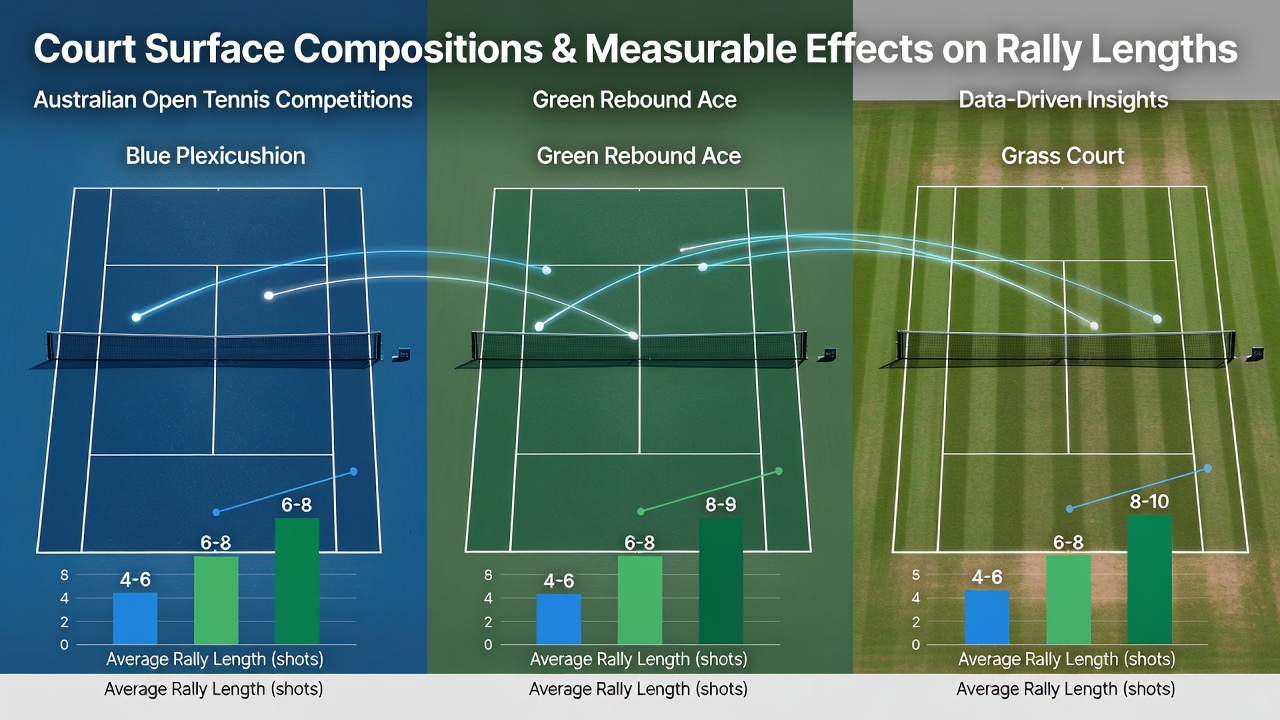
Hard courts at the Australian Open consist of layered materials that include an acrylic topcoat over a cushioned rubber base and concrete foundation, and these elements produce consistent ball bounce that influences rally durations in measurable ways according to match statistics compiled by the International Tennis Federation.
Material Layers and Performance Characteristics
GreenSet surfaces installed since 2020 feature multiple strata where the uppermost acrylic coating determines friction levels while the underlying foam cushioning absorbs impact forces, and observers note that this combination yields medium-paced conditions compared with grass or clay installations elsewhere on the tour. Researchers tracking ball rebound heights have recorded averages of 1.4 meters from a 2.54-meter drop on these courts, a figure that supports extended exchanges because players encounter predictable trajectories rather than erratic skids or high kicks.
Historical Surface Transitions at Melbourne Park
Rebound Ace covered the courts from 1988 through 2007 before Plexicushion replaced it in 2008, and each iteration altered rally patterns as documented in official tournament archives where average point lengths increased by roughly 0.8 shots per exchange following the 2008 change. Data collected across multiple editions show that slower surface speeds encouraged baseline rallies exceeding eight shots more frequently, whereas earlier faster compositions favored quicker points that ended within four or five strokes.
Quantitative Rally Data Across Editions
Match analytics from 2015 onward reveal that Australian Open rallies averaged 5.9 shots per point on the main courts, a duration positioned between Wimbledon grass figures near 4.2 shots and Roland Garros clay marks above 7.8 shots according to aggregated ATP tracking systems. Players competing on the current GreenSet setup encounter reduced skidding that permits earlier contact points, and this factor contributes to rally extensions because groundstrokes maintain depth without excessive acceleration off the court.
Environmental Interactions with Surface Composition
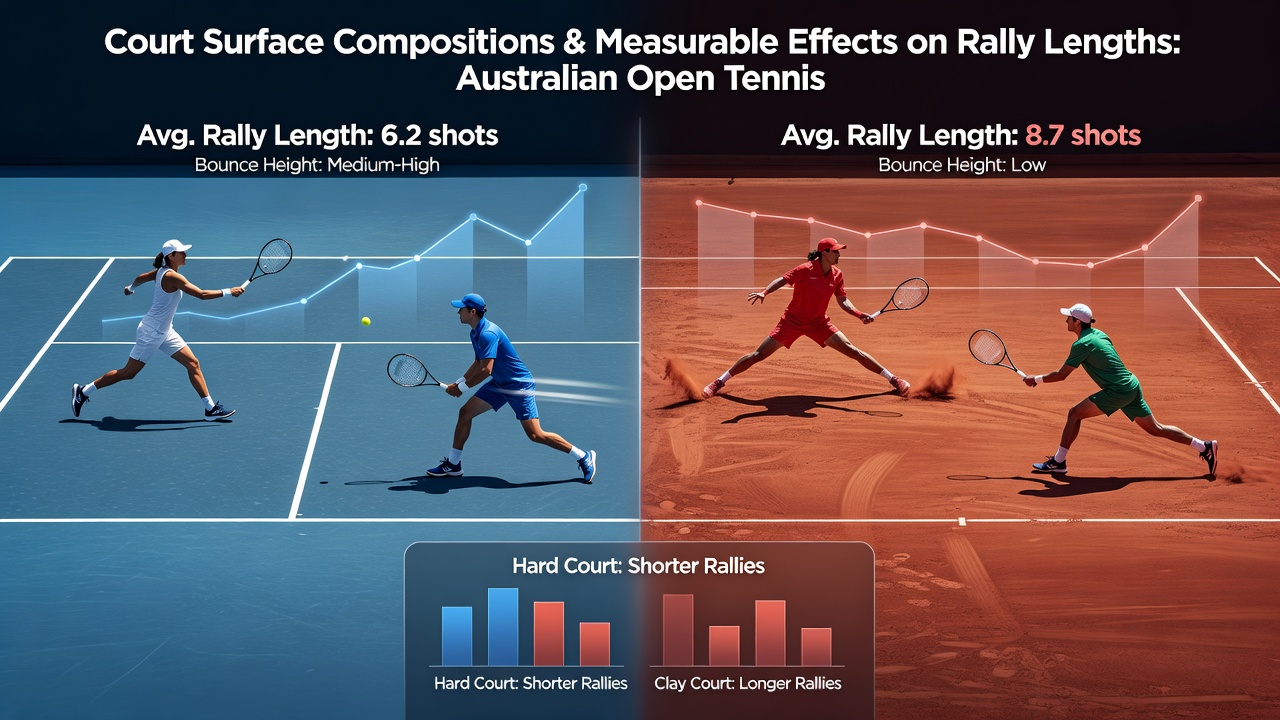
Temperature fluctuations during January events affect acrylic hardness, and studies conducted by the University of Melbourne indicate that warmer conditions above 32 degrees Celsius increase surface pace by up to 4 percent, shortening rallies by an average of 0.6 shots per point while cooler evenings preserve the designed cushioning response. Humidity levels also interact with the rubber underlayers, because higher moisture content softens the topcoat slightly and allows greater spin retention that prolongs defensive exchanges.
Player Adaptation Patterns Documented in Statistics
Baseline-oriented competitors adjust swing paths to exploit the medium grip provided by the acrylic layer, and records show that topspin forehands generate bounce angles that keep opponents pinned deeper, thereby extending rallies beyond those produced on low-bounce alternatives. Serve-and-volley tactics appear less frequently in Australian Open data sets because the surface returns serve speeds at rates that permit returners to counter effectively, and this dynamic shifts match tempo toward longer groundstroke sequences.
Comparisons with Other Grand Slam Surfaces
While Wimbledon grass courts accelerate balls through lower friction coefficients that truncate rallies, and Paris clay courts retain moisture to slow movement and increase point lengths, the Melbourne hard courts occupy an intermediate category where rally distributions cluster around six to seven shots according to cross-tournament analyses released by the ATP. Equipment choices such as polyester strings interact with these surface traits to amplify control, and data from multiple seasons confirm that players using such strings maintain rally durations 12 percent longer than those employing natural gut on identical courts.
Measurement Methods and Ongoing Monitoring
Officials employ high-speed cameras and ball-tracking software to log contact points and durations, and figures compiled through these systems feed into annual reports that guide surface maintenance schedules at Melbourne Park. Adjustments to cushion thickness occur when rally averages deviate beyond set thresholds, and such interventions ensure consistency across the two-week event window.
Conclusion
Surface compositions at the Australian Open continue to shape rally characteristics through their layered construction and interaction with environmental variables, while collected statistics demonstrate clear differences from faster and slower alternatives on the circuit. Ongoing refinements based on performance data maintain the balance that defines competition at this venue.