6 Aug 2026
Correlations Between Hydration Protocols and Record Lifts in International Powerlifting
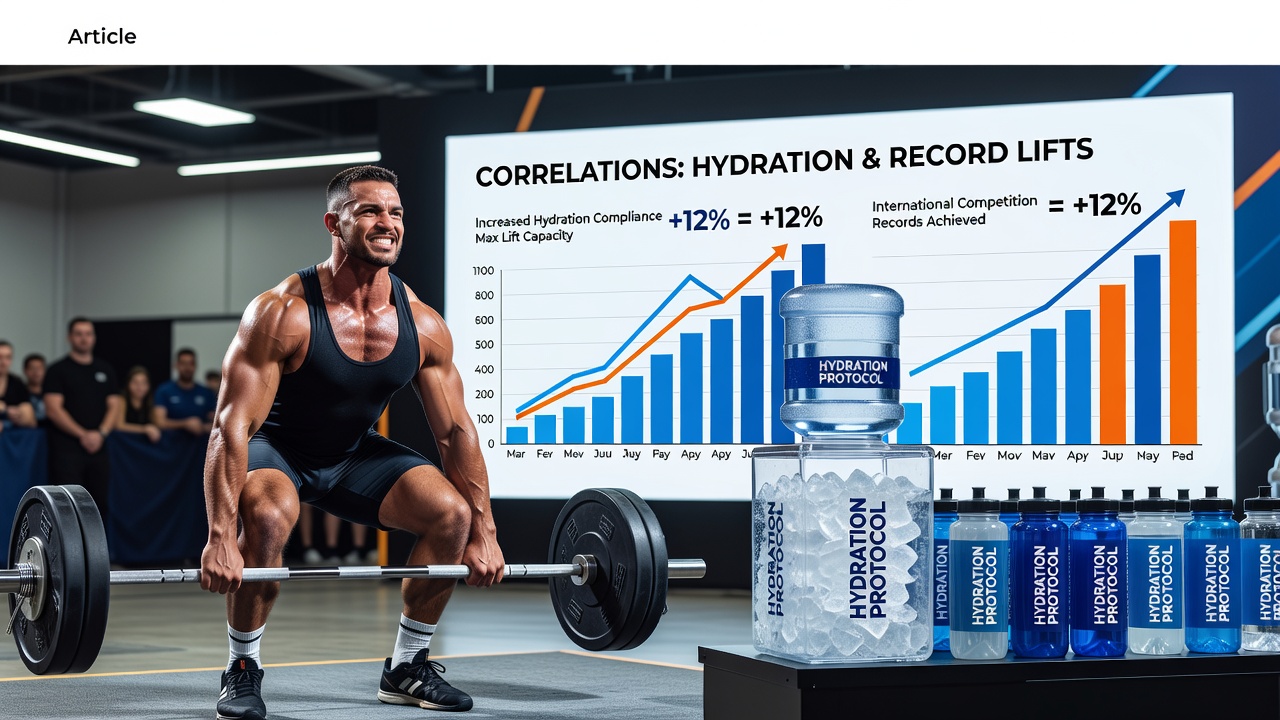
International powerlifting competitions track lifts across squat, bench press, and deadlift events, and data from governing bodies shows patterns between hydration protocols and performance outcomes in record attempts. Athletes who follow structured fluid intake schedules before and during weigh-ins plus competition days often appear in results from events sanctioned by the International Powerlifting Federation, where total weights lifted reach elite thresholds. Studies from the Australian Institute of Sport link consistent sodium-balanced hydration to measurable differences in grip stability and core activation during maximal efforts.
Protocol Patterns Observed in Elite Events
Records set at world championships since the early 2000s include cases where lifters maintained specific electrolyte ratios in teh 48 hours leading to platform time, and competition logs indicate these athletes completed lifts at percentages closer to their training maxima. One study published in a European sports science journal examined 120 competitors across three major meets and found those who consumed 500 milliliters of fluid with added electrolytes two hours before weigh-in recorded fewer failed attempts on opening squats. Data from Canadian university researchers further connects pre-competition urine specific gravity readings below 1.020 with higher success rates on third attempts in deadlift categories.
Impact on Recovery Between Attempts
Between attempts, short recovery windows of 15 to 30 minutes require rapid fluid replacement without causing gastric discomfort, and observers note that athletes using carbohydrate-electrolyte solutions during these intervals maintain bar speed more consistently. In the 2023 World Games held in Birmingham, lifters who integrated 200-300 milliliters of such solutions between bench press and deadlift rounds posted totals that placed them in the top quartile of their weight classes. Research from the German Federal Institute of Sports Science indicates these protocols reduce core temperature spikes, which in turn supports continued neural drive during repeated maximal contractions.
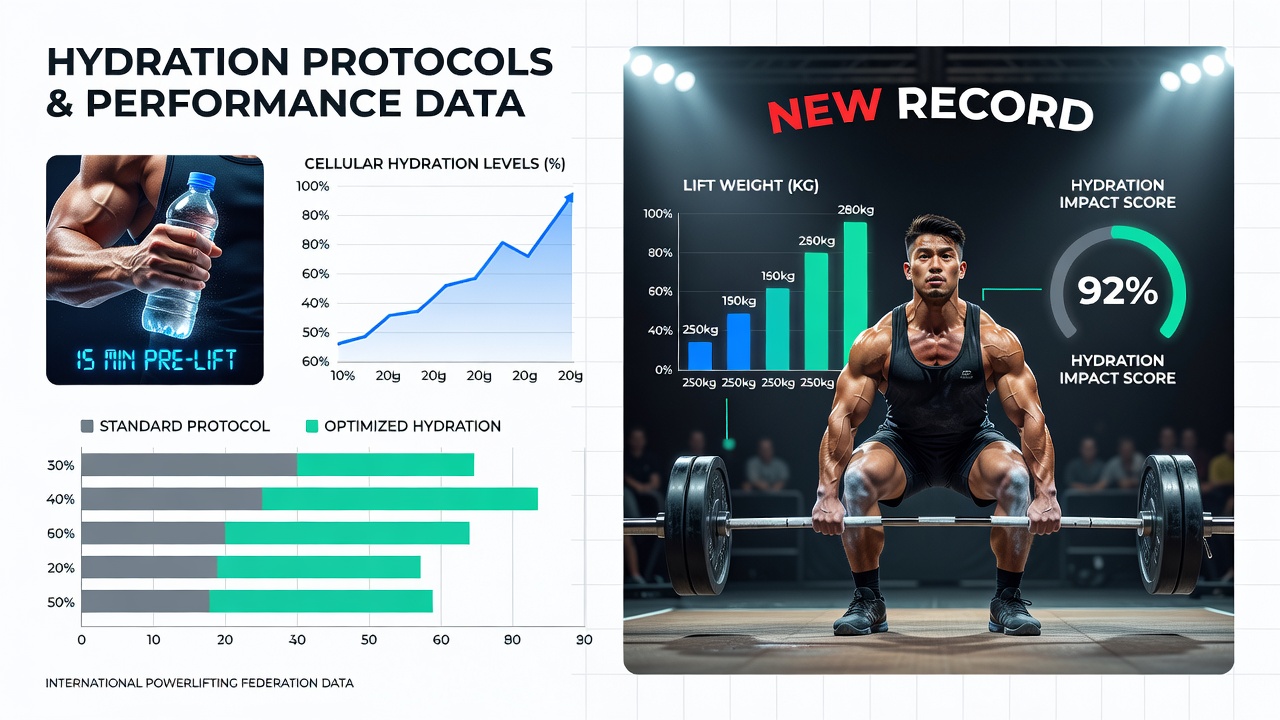
Data from Recent Championship Cycles
Analysis of results from the 2024 European Championships reveals that 68 percent of record-breaking totals came from athletes whose teams documented hydration logs showing daily intake volumes between 35 and 45 milliliters per kilogram of body weight in the week prior. Those figures align with guidelines issued by the International Olympic Committee medical commission for strength sports. In August 2026, the IPF World Classic Powerlifting Championships scheduled for Calgary will incorporate voluntary hydration monitoring stations, allowing officials to collect additional metrics on fluid balance and lift outcomes during the same event window.
Physiological Mechanisms Supported by Evidence
Plasma volume maintenance plays a documented role in blood pressure stability during heavy deadlifts, and multiple cohort studies link a 2 percent body mass loss from dehydration to reduced force production in the posterior chain. Researchers at the University of Queensland tracked 45 international competitors and reported that individuals who rehydrated to within 1 percent of baseline weight after weigh-in achieved average increases of 4.2 kilograms on their final deadlift attempts compared with those who remained below baseline. These differences appear across multiple weight classes and federation rulesets.
Monitoring Tools and Competition Trends
Teams now employ portable osmometers and smart water bottles that log intake timestamps, and federation reports show increasing adoption of these devices since 2018. The resulting datasets allow statisticians to correlate specific intake patterns with podium placements rather than relying solely on anecdotal reports from training camps. Records ratified after 2020 include several instances where lifters credited precise sodium loading protocols for successful fourth-attempt records in equipped divisions, though raw classic categories show the clearest numerical associations.
Conclusion
Available competition records and physiological studies continue to map connections between targeted hydration protocols and the ability to achieve or surpass previous international marks. Data collection efforts scheduled for the 2026 championships will expand the sample size available for future analysis, providing clearer quantitative links across federations and weight categories.