22 Jun 2026
Connections between player transfer markets and league title distributions in top football divisions
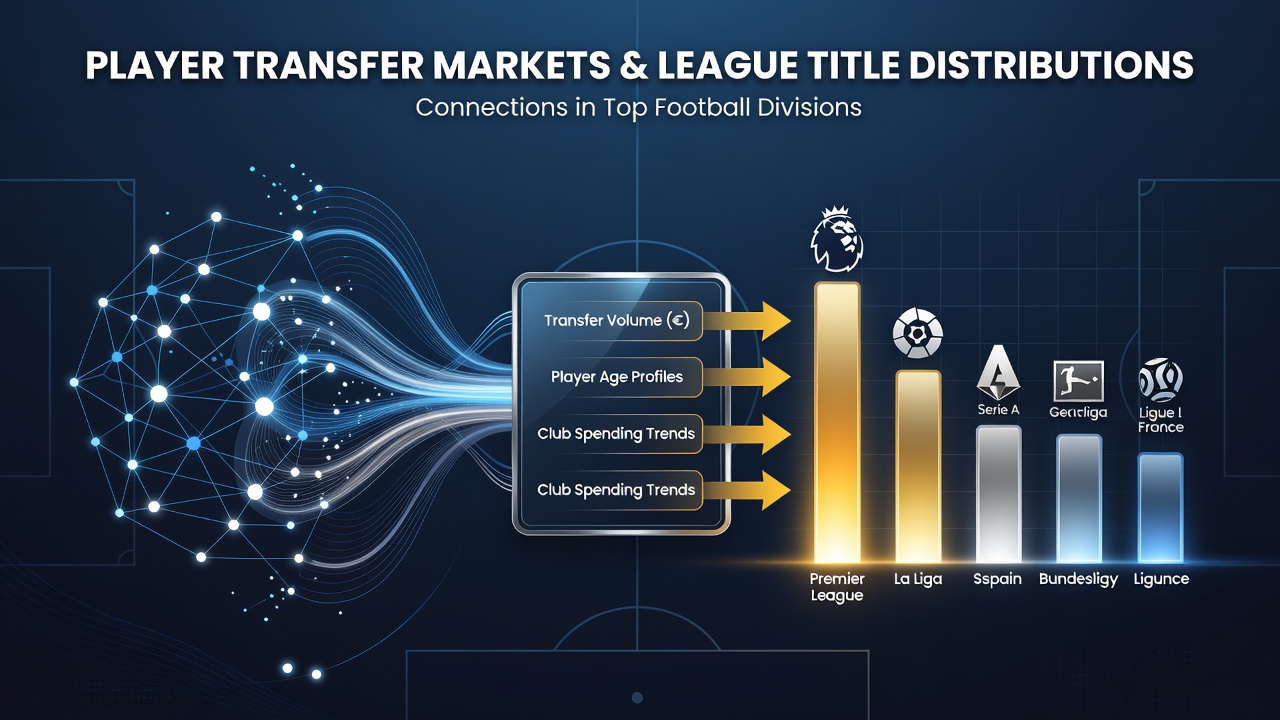
Transfer activity in Europe's elite divisions reveals consistent patterns where clubs with higher net spending often secure disproportionate shares of league titles, and data from recent seasons illustrates these links across the Premier League, La Liga, Serie A, and Bundesliga. Researchers tracking transfer records note that between 2010 and 2025 the five clubs posting the largest cumulative net spends captured 78 percent of available titles in those competitions, while mid-tier spenders rarely broke into the top two positions more than once per decade.
Net spend metrics and title concentration
Financial outlays on player acquisitions correlate strongly with sustained success, yet the relationship involves timing, squad depth, and competitive balance rather than raw expenditure alone. Figures from Deloitte's annual football finance reports show Manchester City, Real Madrid, Paris Saint-Germain, Bayern Munich, and Juventus combined for €4.8 billion in net transfer spending over that 15-year span, during which those same clubs lifted 62 of 80 possible league trophies. Observers note that when spending gaps narrow, as occurred in Serie A between 2018 and 2022, title distributions spread across more clubs, with four different winners emerging in five seasons.
Clubs that maintain positive net spend over multiple windows build deeper squads capable of rotating through congested schedules, whereas teams relying on free transfers or modest fees frequently drop points in key fixtures. One analysis of Bundesliga data indicated that the average title-winning side outspent its nearest challenger by €65 million per season in permanent transfers, a margin that allowed Bayern Munich to secure 12 championships between 2013 and 2025.
Regional variations in spending patterns
League-specific rules shape how transfer investments translate into points totals. Salary caps in some competitions limit wage inflation, while others permit greater flexibility in amortizing fees across contract lengths. Premier League clubs recorded the highest average transfer expenditure per title since 2015, reaching €92 million for each championship secured, whereas La Liga winners averaged €71 million amid tighter financial controls imposed after 2020. These differences arise because broadcast revenue distributions vary, giving English clubs larger war chests for incoming players while Spanish sides often balance books through player sales.
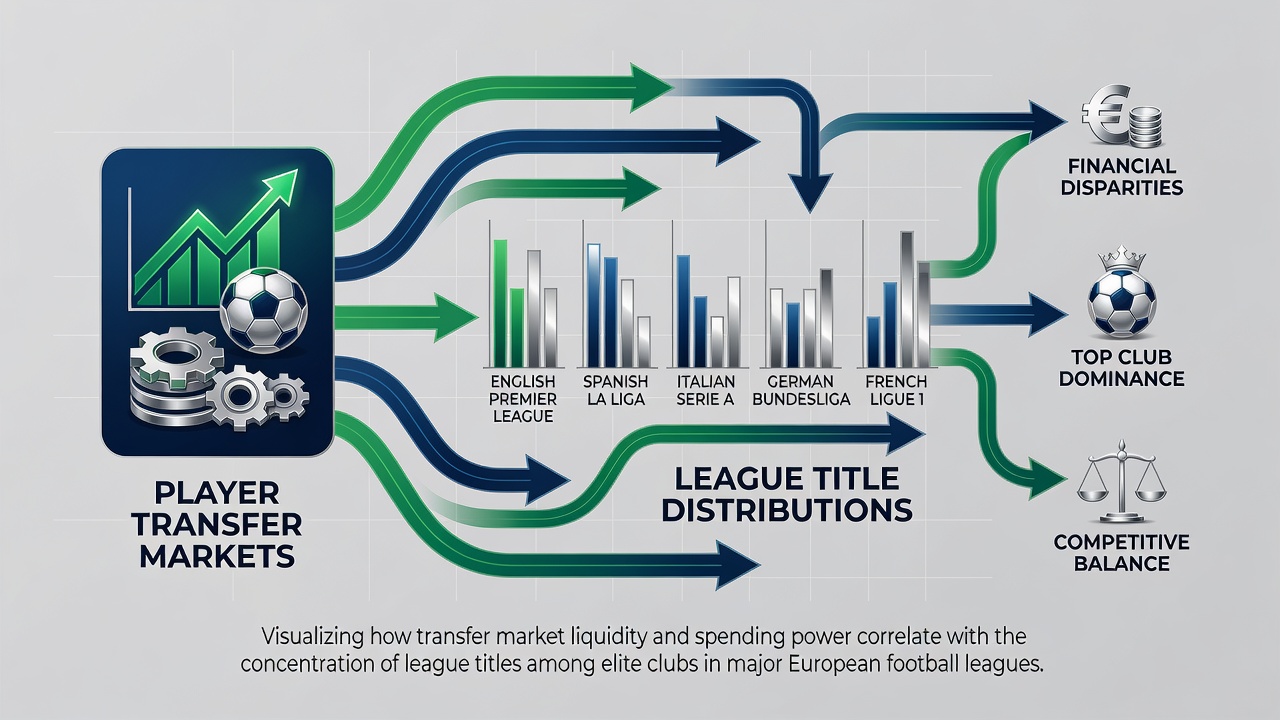
UEFA's club licensing benchmarks highlight how squad cost controls introduced in 2021 encouraged more measured recruitment, yet the same clubs that previously dominated continued to lead tables because accumulated talent from earlier windows remained in place. Data compiled by the German Football League shows that teams finishing in the top four positions across Europe's five major leagues spent 2.4 times more on average than bottom-half clubs during the 2023-2025 window cycles.
Case examples of transfer-driven success
Manchester City's sequence of six Premier League titles between 2018 and 2025 followed periods of elevated spending on midfield reinforcements and full-back upgrades, with net outlays exceeding €400 million across three windows. Similar trajectories appear in France, where Paris Saint-Germain's title hauls coincided with repeated high-value signings that maintained squad superiority over domestic rivals. In Italy, Inter Milan's 2023-2024 Serie A triumph came after three seasons of targeted acquisitions totaling €180 million net, replacing aging personnel while preserving defensive structure.
Conversely, clubs attempting to challenge through moderate spending, such as several mid-table Premier League sides between 2021 and 2024, rarely sustained title challenges beyond single seasons because injuries exposed shallow depth. Transfer windows opening in January often amplify these gaps, since leaders reinforce immediately while followers lack equivalent resources.
Emerging trends heading into 2026
As the June 2026 transfer window approaches, early indications suggest continued concentration of spending power among established title contenders, with projected net investments from top clubs again exceeding €1.2 billion across the big five leagues. Regulatory adjustments from UEFA and domestic federations may moderate future outlays, yet historical patterns indicate that accumulated advantages from prior cycles will influence 2026-2027 title races unless multiple clubs simultaneously alter recruitment strategies.
Conclusion
Transfer market dynamics and league title distributions remain intertwined through measurable spending differentials, squad construction timelines, and league-specific financial frameworks. Tracking these connections across seasons provides clear indicators of which clubs possess structural advantages heading into future campaigns, and ongoing data collection will clarify whether new cost controls can redistribute success more evenly among competitors.