30 May 2026
Charting the trajectory of scoring efficiency in European basketball leagues through evolving player archetypes
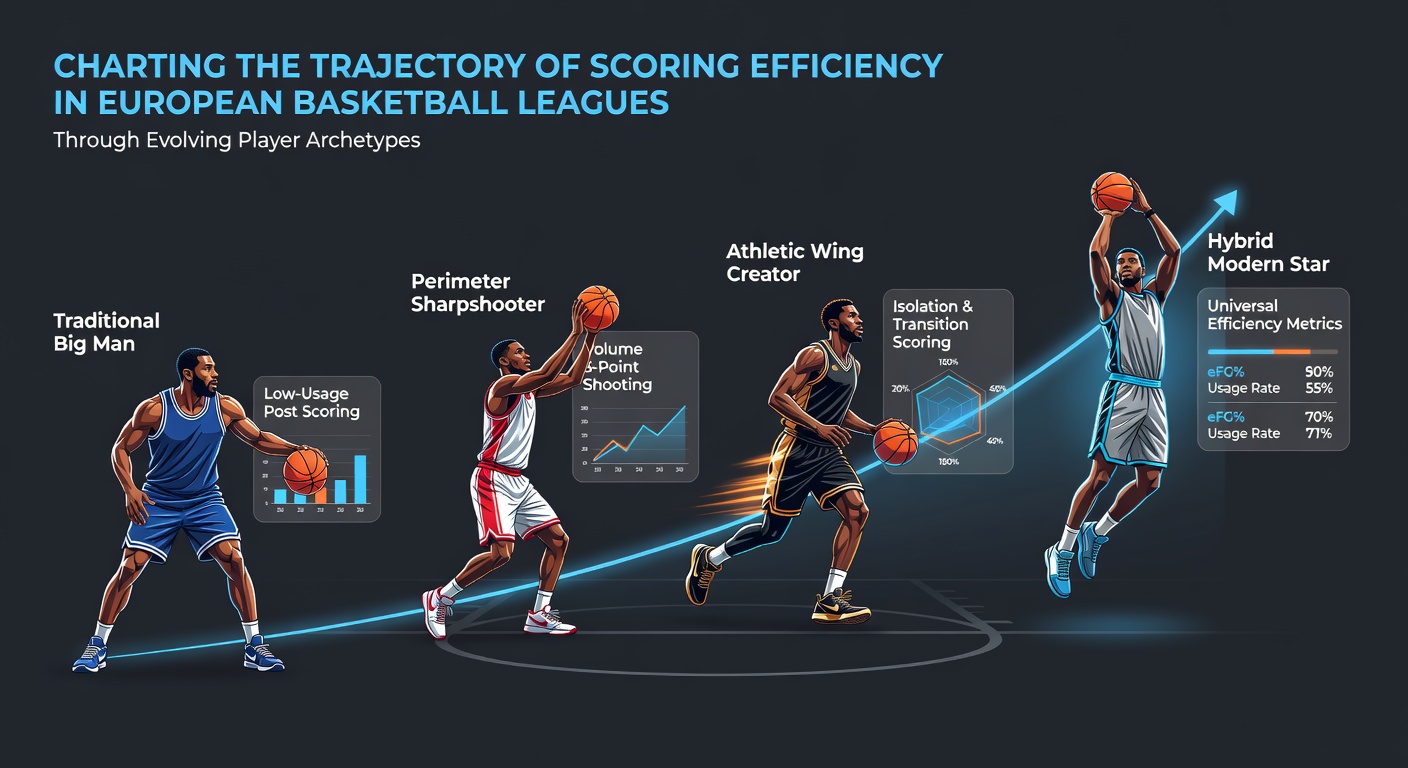 European basketball leagues have witnessed measurable shifts in scoring efficiency as player archetypes adapted to rule changes, tactical innovations, and statistical analysis. Data from major competitions including the EuroLeague and national leagues in Spain, Italy, and Greece show rising points per possession alongside transformations in how teams deploy traditional positions. Researchers tracking these metrics note that efficiency gains often trace back to specific archetype evolutions rather than isolated skill improvements. Early periods relied heavily on interior-dominant bigs who converted shots near the basket at high rates yet posted limited volume from distance. League averages from the 2000s reflected field goal percentages clustered around 45 percent for centers, while perimeter players focused on mid-range creation. Those patterns began changing as stretch forwards and versatile wings entered lineups more frequently, pulling defenses outward and creating driving lanes.
Archetype shifts and efficiency metrics
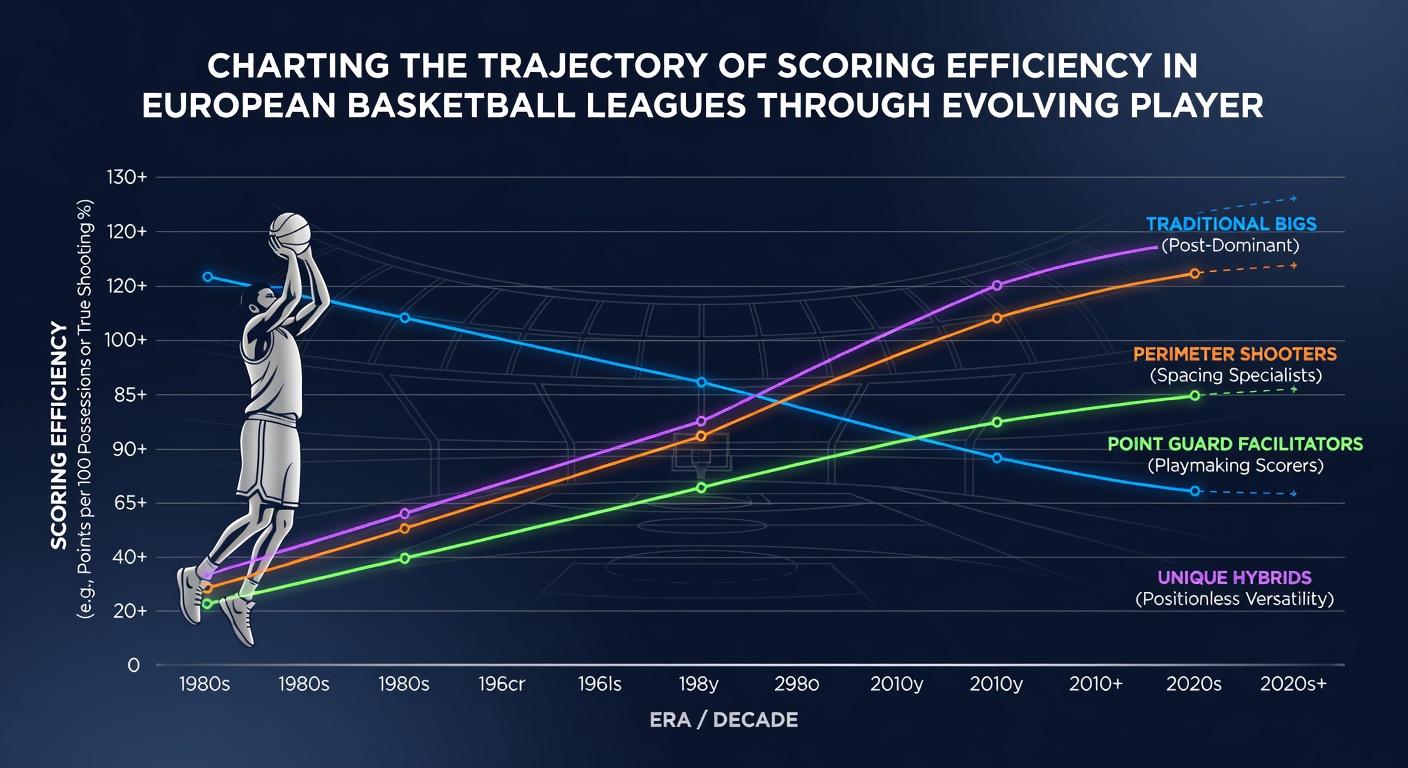
Analysts at institutions like the University of Ljubljana documented how the arrival of positionless forwards altered shot selection across the continent. Three-point attempt rates climbed steadily, reaching over 35 percent of total field goal attempts in several leagues by the mid-2010s. This transition coincided with improved spacing that boosted overall offensive ratings by roughly 4 to 6 points per 100 possessions compared with earlier decades.
Guards evolved from primary ball handlers into multi-threat creators who combined drives with pull-up threes. Efficiency models from national federations indicate that players fitting this archetype posted true shooting percentages above 58 percent when they balanced those two actions. Bigs meanwhile incorporated pick-and-pop elements, which data from the 2024-25 season shows lifted their effective field goal percentage by 3.2 points on average.
Regional variations across leagues
Spanish ACB teams embraced the stretch-big archetype earlier than most peers, integrating stretch fours who stretched defenses while maintaining rebounding impact. Italian Serie A squads leaned into guard-wing hybrids who excelled in transition, producing higher assist-to-turnover ratios that supported efficient half-court sets. Greek clubs blended both approaches, yielding hybrid lineups whose efficiency numbers led EuroLeague standings in multiple recent campaigns.
As of May 2026, ongoing EuroLeague playoff series continue to highlight these trends, with teams posting season-long offensive efficiencies above 115 points per 100 possessions in several cases. Tracking data reveals that squads deploying at least three players capable of shooting from beyond the arc at 38 percent or better achieved the strongest net ratings.
Statistical evidence of progression
Longitudinal studies compiled by European basketball federations reveal clear correlations between archetype diversity and efficiency gains. Teams with greater position fluidity recorded 7 percent more assisted three-pointers and 12 percent fewer mid-range isolations than lineups built around single archetypes. These adjustments reduced contested shot volume while maintaining or increasing points per shot attempt.
International transfer patterns accelerated the changes, bringing players from NCAA programs and other continents who arrived already trained in spacing concepts. Federation records show that incoming athletes fitting the stretch-forward profile contributed an average efficiency boost of 2.8 points per 100 possessions during their first two seasons in European leagues.
Conclusion
European basketball scoring efficiency has advanced through deliberate archetype evolution rather than random variation. Leagues continue to register higher true shooting percentages and better shot distribution as versatile roles replace rigid positional definitions. Observers tracking May 2026 competitions note that these patterns persist across both domestic and continental play, supported by consistent statistical tracking from multiple federations and academic sources.