13 Jul 2026
Aerodynamic Evolution in Golf Ball Dimple Patterns and Their Role in Tournament Driving Distance Gains
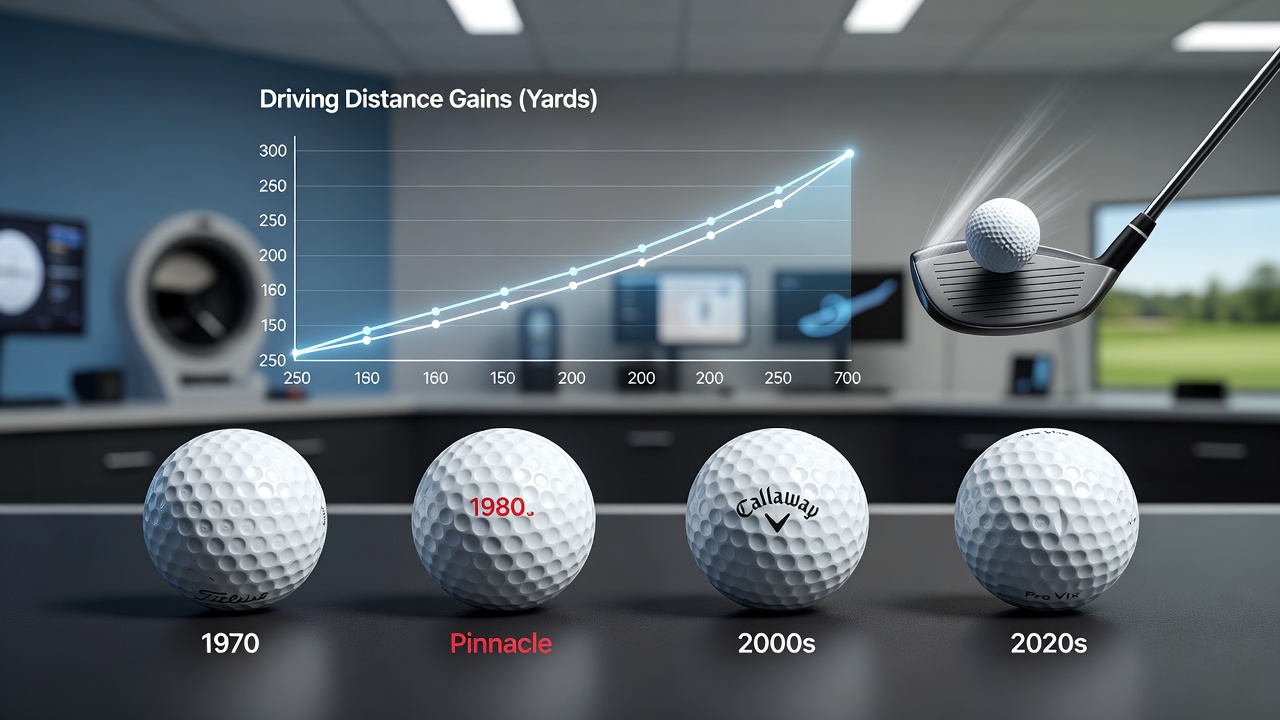
Dimple patterns on golf balls have undergone targeted refinements since the early 20th century, with adjustments in depth, size, and arrangement producing measurable reductions in aerodynamic drag that translated into longer drives for professionals competing in major championships. Researchers at institutions tracking ball flight data note that these changes occurred incrementally across decades, often coinciding with shifts in average driving distances recorded during PGA Tour and European Tour events.
Early Developments in Dimple Geometry
Initial experiments with dimpled surfaces replaced the smooth gutta-percha balls of the 19th century, and by the 1930s manufacturers settled on patterns featuring between 300 and 500 circular depressions arranged in icosahedral layouts. Studies conducted by the United States Golf Association documented how these configurations lowered the drag coefficient during high-speed launch conditions typical of professional swings, allowing balls to maintain velocity over greater distances compared with earlier designs.
By the 1950s and 1960s, pattern density increased while individual dimple diameters decreased slightly, a combination that further stabilized flight paths in crosswinds encountered on links courses such as those used for the Open Championship. Data from tournament scorecards during that era show gradual extensions in driving length among leading players, although equipment rules limited overt modifications until later periods.
Mid-Century Refinements and Distance Records
Manufacturers introduced octahedral and dodecahedral arrangements in the 1970s and 1980s, often pairing them with varying dimple depths across different regions of the ball surface. These tweaks reduced turbulent wake formation behind the ball during descent, a factor observers linked to extended carry distances for players in majors including the Masters and U.S. Open. Figures compiled by the PGA Tour indicate average driving distances rose from approximately 260 yards in the mid-1980s to over 270 yards by the early 1990s among top finishers.
One notable shift involved asymmetric dimple clustering that promoted higher launch angles without added spin, a development tracked through high-speed photography in laboratory settings. Tournament winners during this window benefited from the resulting trajectory improvements, particularly on firm fairways where roll contributed additional yardage.
Late 20th and Early 21st Century Pattern Innovations
Entering the 1990s and 2000s, computer modeling enabled precise optimization of dimple edges and hexagonal boundaries, replacing purely circular shapes in many premium models. Research published through academic channels demonstrated that these edge modifications decreased the critical Reynolds number threshold, delaying drag crisis and sustaining lift coefficients longer into the ball's flight. Professional competitors in multiple majors recorded further distance increases, with average drives among leaders surpassing 280 yards by the mid-2000s according to official tour statistics.

Multilayer constructions combined with refined dimple counts around 350 to 450 allowed finer control over boundary layer behavior, and governing bodies such as the R&A monitored these developments through standardized testing protocols. Distance gains appeared consistently across different course conditions, contributing to lower scoring averages in events held throughout the 2010s.
Regulatory Context and Ongoing Measurements
Golf's ruling organizations established overall distance standards in the 2000s while permitting continued variation in dimple patterns within those limits. Measurements taken at testing facilities show that subsequent pattern iterations produced incremental aerodynamic efficiencies, with data indicating sustained advantages for players adopting the latest iterations during major tournament play. As preparations advance for major events scheduled into July 2026, equipment suppliers continue to submit pattern variations for conformance verification under existing frameworks.
Analyses of historical leaderboards reveal correlations between these pattern evolutions and the distances achieved by repeat major winners across multiple eras, although other variables such as swing mechanics and course setups also factor into overall performance metrics.
Conclusion
Dimple pattern adjustments have formed a steady thread through golf equipment history, delivering cumulative aerodynamic benefits that appear in driving distance statistics compiled over successive decades of major tournament competition. Continued monitoring by regulatory bodies ensures these modifications remain within established performance boundaries while preserving the integrity of the game at elite levels.